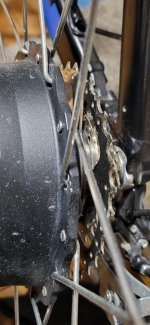
Broke two spokes today

jamesm113

New Member
Region
USA
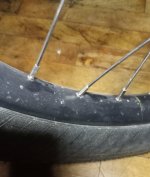
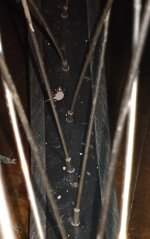
Ariel Rider X-Class 52V with a 20" wheel. Figure I'll replace all of them.

Was reading that Phil Wood cut spokes are probably going to be a bit stronger. Is that accurate?

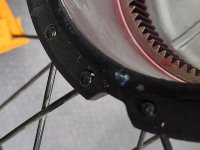
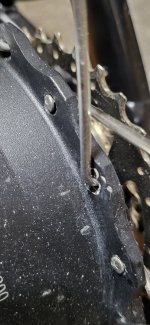
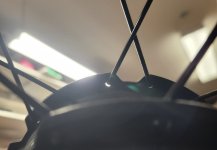
I've also noticed the spokes aren't fully seated in the spoke holes - is there a good way to address that?
 

Attachments

  • 20250222_174246 (1).jpg
    20250222_174246 (1).jpg
    170.7 KB · Views: 17
  • 20250222_174305.jpg
    20250222_174305.jpg
    306.6 KB · Views: 17
depending on where the spoke broke you could estimated what the issue was with the spoke. If the broke in the "elbow/hook" or the spoke at the hubs flange the tension was too low on the spokes (is most common issue)

to get a tight fit with theses spokes in these eyelets, use spoke washers. And during building the wheel, use a centerpunch to correctly seat the spoke heads in the washers.
 
right, presumably running low spoke tension for a while. spoke washers are a common thing

1772009117509.png
 
I'm not very familiar with spoke washers - are they common items I can get from a bike shop?
They are common, as are broken spokes. Most bike shops will have them and be able to fix this issue. You can also buy them online.

Some bike shops will have the Phil Wood machine and be able to cut custom length spokes. These are usually single gauge and not necessarily stronger than double butted spokes.

The problem is the steep angles of the spokes when lacing a big hub motor into a 20" rim with a cross pattern. Sometimes you even have to use a radial pattern in this situation.
 
I'd replace the broken ones and then true the wheel with the proper spoke tension. There's videos available or bring it to a bike shop.
As already stated, it's the most common cause so replacement isn't going to solve the problem unless you true/tension properly.

Also check this from the article RftH linked

Seating at Bend
A common reason for spokes to fail on hub motors isn't because the motor puts extra strain on the spokes, or because the spokes aren't a thick enough gauge, it's because of fatigue failure from spokes that aren't held snug against the flange. If the spoke bend radius is too large or too far from the head, then it can flex up and down at the bend with each wheel rotation, eventually causing it to crack and fail.

This problem has been legendary with overseas built hub motors, and we had some Crystalyte shipments where about half the customers would experience spoke breakage on a recurring basis. Ideally the distance between the head and the bend in your spoke will match the thickness of the hub flange, and you won't have problems. But if not, there are two ways to address the situation. One is to insert a washer under the spoke head. The second way is to lace the wheel in an over/under pattern, such that the spoke tension compresses the bend part of the spoke into the flange.
 
Last edited:
I remember a specific ebike where the hub motor was drilled for 12 gauge spokes, but it had 14 gauge spokes installed.

The loose fitting spokes kept snapping in the same way as your spokes.

The fix was to install 12 gauge spokes.

If this is the case with your wheel, you might need tapered spokes or a new rim with 12 gauge spoke holes for the larger 12 gauge spoke nipples.
 
Back