Li-ion Battery experiences

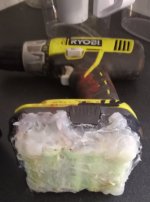
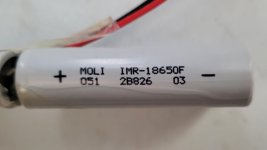
This is a "standard" 12 volt Li-Ion battery pack,..
3 cells in series. No BMS.
(I peeled off the plastic shrink wrap)
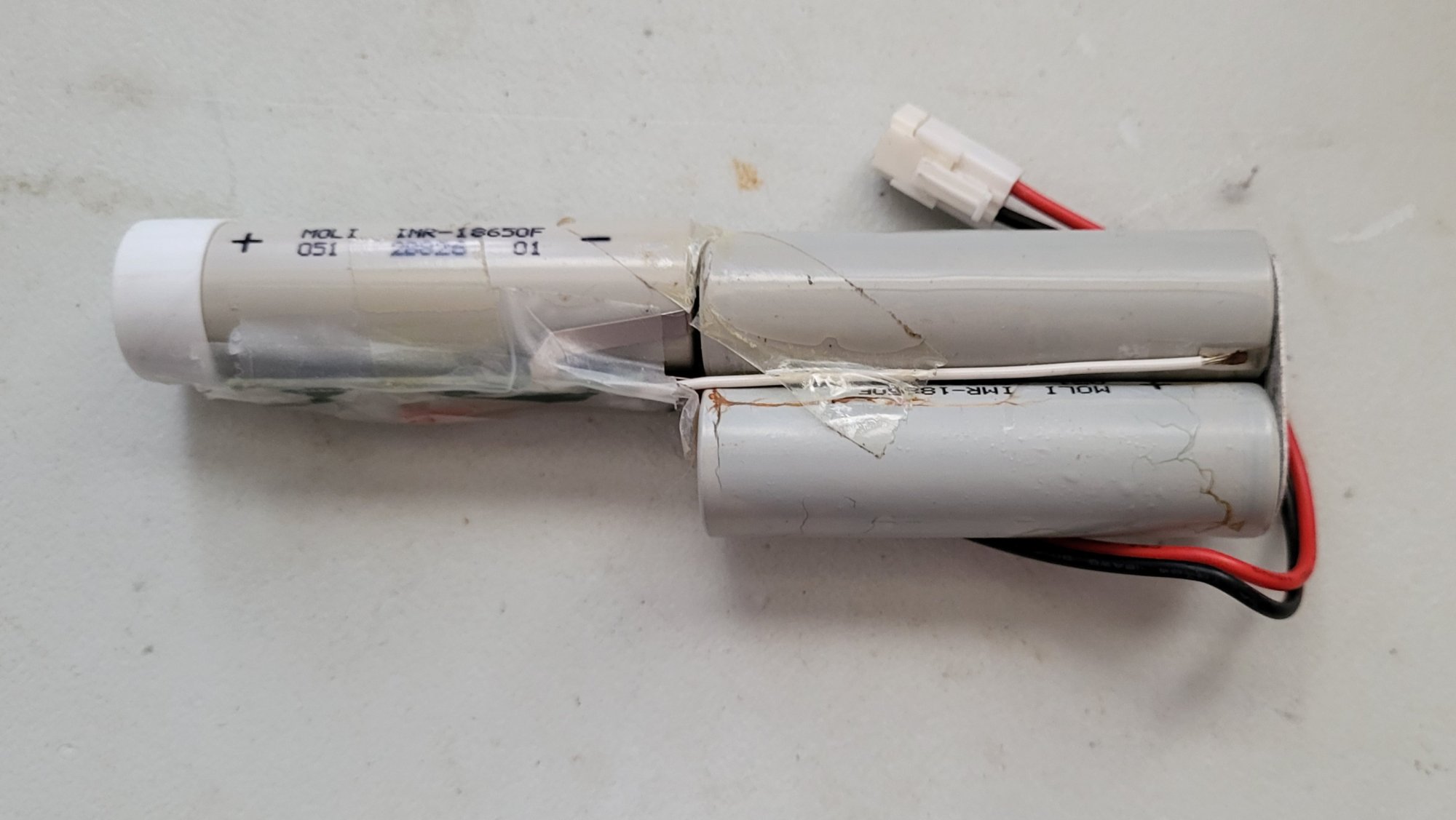

20260603_131546.jpg


It was from my mother's electric bathtub chair/lift.

It was charged with a simple 12vdc power adapter that was always plugged in and connected directly to the battery, so it was always charging.
(the adapter didn't have enough power to operate the chair on its own)


There was never any "overcharging" type issue because the cells never reached full charge, but mom did manage to kill the battery.
(she thought that if she held the "UP" button on her remote long enough, the chair would eventually lift up higher. Lol
Took 5-10 minutes to kill the battery pack.)


Even when the battery pack died, it didn't burst into flames. It just lost most of it's capacity, and would only lift the chair an inch then you'd have to wait for it to "recharge" to get another inch of movement.

(We ended replacing the battery, and adding a switch to the lift mechanism that would turn off the power when the chair was at the top position.)


FYI, you can't connect a simple 3 cell lithium pack to a car because the alternator running voltage is frequently over 14 Volts.
(12V car batteries charge at ~13.8 Volts)

That would be 4.67 Volts per cell, and you'd cook the cells.
If you added a fourth cell in series, each cell would only be at ~3.5 Volts which is almost useless and too close to "empty".
 

Attachments
  • 20260603_131509.jpg
    20260603_131509.jpg
    144.3 KB · Views: 7
  • Screenshot_20260603_132022_DuckDuckGo.jpg
    Screenshot_20260603_132022_DuckDuckGo.jpg
    156.4 KB · Views: 11
  • Screenshot_20260603_132102_DuckDuckGo.jpg
    Screenshot_20260603_132102_DuckDuckGo.jpg
    145 KB · Views: 11
Last edited:
I managed to hook up two Milwaukee 18V batteries together to run my old POS ebike,..


View attachment 210905


The old SLA 12V batteries crapped out, so I bought a 36V 8ah Li-ion scooter battery pack which does have a BMS.


@6zfshdb Do you happen to know if Milwaukee has the LVC in the battery?

My ebikes' controller will apparently shut down at LVC, but I've never had it kick in, (especially running the lead acid batteries) but I'm not sure if the LVC is different for an ebike expecting to run off SLA batteries?

It was you that informed me about the LVC being in the tool, and I proved it by plugging my "dead" Ryobi battery into my Ryobi worklight, and the light worked but the battery didn't work in any other tool.

My Milwaukee batteries do have a built-in bar graph display, and I've got a voltage gage on my ebike as well, but I guess that I need to keep in mind that it's possible to over-discharge my batteries?


@6zfshdb ,.. thanks for informing me about the battery adapters that are available.
I had no idea something like that was available.
(I thought I'd have to cannibalise an old battery to get a "connector ")

I bought 4 adapters (intended to be used to power a child's electric ride-on toy) that work great to easily connect my batteries to my ebike without soldering.

I also bought a couple Milwaukee-Ryobi converters to use my Milwaukee batteries in my Ryobi tools.
The adapters have a USB port, so I can use my batteries as a power bank.
No, Milwaukee M12 and M18 batteries do not have a low voltage cutoff in the BMS. Like DeWalt, it's in the tool. Ryobi batteries do have the LVC in the battery.
 
No, Milwaukee M12 and M18 batteries do not have a low voltage cutoff in the BMS. Like DeWalt, it's in the tool. Ryobi batteries do have the LVC in the battery.

Well, now I'm confused??

I remember us talking about that a couple years ago,..


I managed to get my Ryobi flashlight to work when the battery didn't work in any other tools??
(Maybe it's got something to do with LED "bulb" ?)


I'm just going to assume that Non of my batteries have a built-in LVC, so I'm just gonna have to keep an eye on the batteries.

My Milwaukee batteries have a "fuel gage", but the original Ryobi batteries have no gage.

I've got one new Ryobi battery that has a gage, so I retired this Ryobi battery that I Turbocharged. 😁
 

Attachments

  • 20230218_140540.jpg
    20230218_140540.jpg
    141.8 KB · Views: 10
This is the best approach to avoid any possible damage. I keep an eye on voltage anyway with all my batteries to avoid going below 20%. I rarely see the LVC activate.
On my bike I think I've hit LVC less than a handful of times in all my riding.
With tools it happens much more often.. but as stated earlier a more conservative LVC is already built in. Plus I use it as an excuse to be done for the day! 🙃
 
Yes, absolutely. I’m strictly talking about lithium-ion batteries. Other technologies have (very) different best practices.
This and other articles from this site is what I like to base most of my decisions on...
And not anecdotal experiences of other end users.
 
Last edited:
Here's another anecdote: 36v BtrPower battery several years old, unused/uncharged since ~'23. I dug it out because I'm planning on some rails to trails riding, taking my '06 Walmart Schwinn with 6-7 year old TSDZ2 (because it has walk assist which BH unexplainably blocked on my Yamaha powered gravel bike otherwise I'd take that bike). VOM 38.9V, I don't know of a way to check remaining AH so I'll charge it up and take my chances. I am bringing two other batteries, a new Keyde 36v 10.5ah and a "I don't recall how old (several years)" 15ah battery. Wish me luck.

IMG_20260604_193304951_HDR.jpg
 
Last edited:
How’d it go, @EMGX? Do you have a voltage readout anywhere while you’re riding. You can tell a lot from that as you’re riding. Cheers.
 
Well it really depends on what voltage it was at when put in storage, the quality of the cells and the features of the BMS. In 2023 I stored my then 2 year old 10ah Sanyo GA cell battery for near another 2 years at 54.5V and though I did check it periodically, the voltage at the end of that time was 54.3V. It's now back on a bike for the last 6 months and it's working at or close to new. The BMS does have an On/Off switch that shuts down everything if that matters.
In 2010 I purchased a LG HBM-235 Bluetooth headset and I used it for 2 - 3 years before I misplaced it. I recently found it and charged it up and it's holding a stand by charge now for over 2 months. In this time I use it about 4 times/week just for 2-3 minutes per call to make keypad entries into a system with some privacy from others in the room. Still states charge as medium.
I have a similar story about an IBM ThinkPad laptop that the battery worked well for 3 years after being rediscovered.

These experiences are far from scientific and I still think it prudent to follow the advice of those that actually did do multiple years of testing on more than one battery.
ymmv

Here's another anecdote: 36v BtrPower battery several years old, unused/uncharged since ~'23. I dug it out because I'm planning on some rails to trails riding, taking my '06 Walmart Schwinn with 6-7 year old TSDZ2 (because it has walk assist which BH unexplainably blocked on my Yamaha powered gravel bike otherwise I'd take that bike). VOM 38.9V, I don't know of a way to check remaining AH so I'll charge it up and take my chances. I am bringing two other batteries, a new Keyde 36v 10.5ah and a "I don't recall how old (several years)" 15ah battery. Wish me luck.
Easiest way to test a battery is one...
See if it still takes a full charge.
And two... Go for a test ride.
I hope it works out for your on your ride
 
Last edited:
Well it really depends on what voltage it was at when put in storage, the quality of the cells and the features of the BMS. In 2023 I stored my then 2 year old 10ah Sanyo GA cell battery for near another 2 years at 54.5V and though I did check it periodically, the voltage at the end of that time was 54.3V. It's now back on a bike for the last 6 months and it's working at or close to new. The BMS does have an On/Off switch that shuts down everything if that matters.
In 2010 I purchased a LG HBM-235 Bluetooth headset and I used it for 2 - 3 years before I misplaced it. I recently found it and charged it up and it's holding a stand by charge now for over 2 months. In this time I use it about 4 times/week just for 2-3 minutes per call to make keypad entries into a system with some privacy from others in the room. Still states charge as medium.
I have a similar story about an IBM ThinkPad laptop that the battery worked well for 3 years after being rediscovered.

These experiences are far from scientific and I still think it prudent to follow the advice of those that actually did do multiple years of testing on more than one battery.
ymmv

Easiest way to test a battery is one...
See if it still takes a full charge.
And two... Go for a test ride.
I hope it works out for your on your ride
Hopefully I didn't just put it in storage fully charged but I wouldn't put it past me - I often feel sorry for the future me.
And I do try to follow the best practices but when it comes down to it I'm not that diligent, obviously.
The battery is a widely panned BtrPower so it probably doesn't have high quality cells or BMS although it has worked well for me in the past.
 
Last edited:
How’d it go, @EMGX? Do you have a voltage readout anywhere while you’re riding. You can tell a lot from that as you’re riding. Cheers.
I only took it for a short spin so far, the display didn't show any voltage sag, only a couple millivolts while riding. Planning to fully charge and see how it does riding up my road (400 ft elevation gain/mile). I won't be surprised if the results aren't what I hope they will be but one can hope.
 
Last edited:
It really depends on the BMS. I had a stack of six of the original Grin LIGO batteries that self discharge very quickly even when put in off mode. I have already lost one of them because it went below the LVC in around six months after being stored at 80% charge. I also have a Jumbo Shark 52V battery from EM3EV that hardly discharges at all when stored.
 
These experiences are far from scientific and I still think it prudent to follow the advice of those that actually did do multiple years of testing on more than one battery.
ymmv


One thing that I like to keep in mind is that there are literally hundreds of millions of lithium batteries out there.
They're in our toothbrushes flashlights, and just about Everything that plugs into a USB port for charging.

I've seen videos of a guy having his vape pipe blow up in his pocket, and he suffered 3rd degree burns from a single cell exploding.

Another video of a laptop (about 5 cells) ignite and set the house on fire.

And of course the "exploding hoverboards", and the cell phone that was recalled because they were catching fire.

But even if there is only a 1% chance of a lithium battery catching fire, we would have seen over a million fires since Lithium replaced NiCad and NMH batteries, and that isn't the case.


,.. Planning to fully charge and see how it does riding up my road (400 ft elevation gain/mile).

Make sure that you keep an eye on your charger and battery while they're charging.
Check for heat and weird smells or noises.
Charge outside if at all possible.

And if something does catch fire, your best best is to Hose It Down with Water.

The only way to put out a lithium fire, is to remove the heat, and that's what water does.
Water damage to a lithium battery can cause a fire, but once the fire is going, water is the best way to extinguish the fire.

Your batteries have been in storage for a long time, so if there's any chance of something going wrong, it's probably going to be during the first few charge and drain cycles.


I remember one guy that had his Dewalt battery catch in the charger.
He managed to throw it on the lawn and put out the fire with the garden hose.

Then he thought it would be a good idea to remove the battery from the charger, and the fire started back up again. Lol

(PS,.. I didn't like what I saw inside the older Dewalt battery I took apart. There was no sort of BMS, just a single wire reading the voltage on a single cell in the pack. (like how they did it with NiCad) There was no way to protect it from cell imbalance.)
 
Last edited:
It really depends on the BMS. I had a stack of six of the original Grin LIGO batteries that self discharge very quickly even when put in off mode. I have already lost one of them because it went below the LVC in around six months after being stored at 80% charge. I also have a Jumbo Shark 52V battery from EM3EV that hardly discharges at all when stored.
Have you tried to recover the battery that went below LVC as I did at the beginning of this thread?
80% SOC for storage is too high, you want to be near 50%. And that's 50% actual cell capacity, not usable.
 
Last edited:
One thing that I like to keep in mind is that there are literally hundreds of millions of lithium batteries out there.
They're in our toothbrushes flashlights, and just about Everything that plugs into a USB port for charging.

I've seen videos of a guy having his vape pipe blow up in his pocket, and he suffered 3rd degree burns from a single cell exploding.

Another video of a laptop (about 5 cells) ignite and set the house on fire.

And of course the "exploding hoverboards", and the cell phone that was recalled because they were catching fire.

But even if there is only a 1% chance of a lithium battery catching fire, we would have seen over a million fires since Lithium replaced NiCad and NMH batteries, and that isn't the case.


Make sure that you keep an eye on your charger and battery while they're charging.
Check for heat and weird smells or noises.
Charge outside if at all possible.

And if something does catch fire, your best best is to Hose It Down with Water.

The only way to put out a lithium fire, is to remove the heat, and that's what water does.
Water damage to a lithium battery can cause a fire, but once the fire is going, water is the best way to extinguish the fire.

Your batteries have been in storage for a long time, so if there's any chance of something going wrong, it's probably going to be during the first few charge and drain cycles.


I remember one guy that had his Dewalt battery catch in the charger.
He managed to throw it on the lawn and put out the fire with the garden hose.

Then he thought it would be a good idea to remove the battery from the charger, and the fire started back up again. Lol

(PS,.. I didn't like what I saw inside the older Dewalt battery I took apart. There was no sort of BMS, just a single wire reading the voltage on a single cell in the pack. (like how they did it with NiCad) There was no way to protect it from cell imbalance.)
I'm going to charge this battery out on the driveway (in the shade) which is how I usually charge my cheap Amazon sourced batteries. Yamaha batteries I charge in the house but not without monitoring.
 
FYI, I charge mine in my fireplace. Don’t know if that’s an option for you. Thought I’d mention...
 
Have you tried to recover the battery that went below LVC as I did at the beginning of this thread?
80% SOC for storage is too high, you want to be near 50%. And that's 50% actual cell capacity, not usable.
The Grin LIGOs are fully potted. I bought them with the Brompton kit I got from Grin. I will never take the bike on a plane, so I will eventually replace them with something else. Right now, it still works with the five remaining batteries in a stack.
 
I'm going to charge this battery out on the driveway (in the shade) which is how I usually charge my cheap Amazon sourced batteries.

If you feel up to it, you could open up your batteries, (if they come apart easily) to look for corrosion or any sort of visible damage inside, especially heat damage.

(fuse holders have been known to melt without blowing the fuse. Wires can break, or heat up and melt the insulation. Individual cell welds have been known to break or crack.)
 
Back