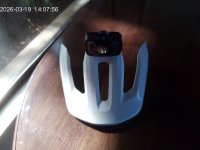
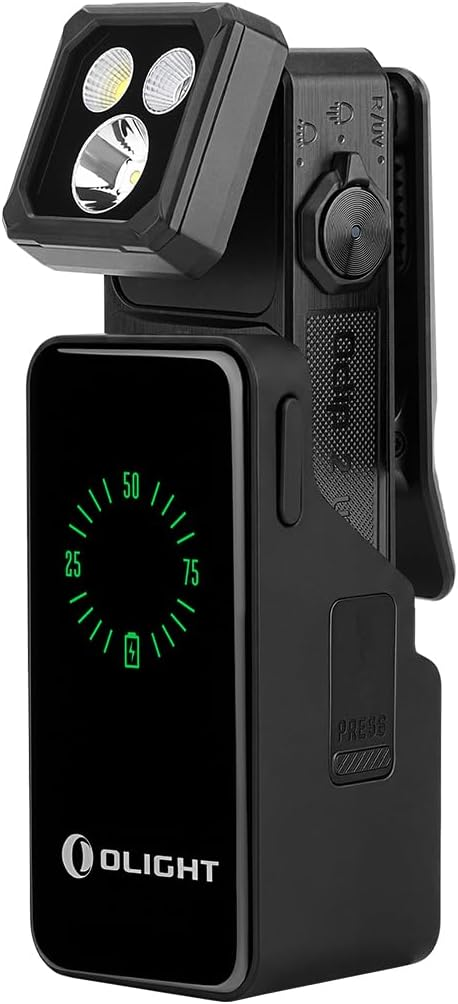
I do a lot of night trail & tunnel riding. I have auxiliary lighting on the bike, but I often need to look side to side and need light when I'm off the bike. I bought this O light mini clip light for other purposes, but found it works well clipped to my helmet visor:

1791825727472.png


There are many helmet lights available, some cheaper and some not, but the flexibility of this one makes it useful for many other situations. It comes with a removeable extra battery pack which doubles the run time.
 
I do a lot of night trail & tunnel riding. I have auxiliary lighting on the bike, but I often need to look side to side and need light when I'm off the bike. I bought this O light mini clip light for other purposes, but found it works well clipped to my helmet visor:

View attachment 216424


There are many helmet lights available, some cheaper and some not, but the flexibility of this one makes it useful for many other situations. It comes with a removeable extra battery pack which doubles the run time.
This is the season to start thinking about lights as the nights become longer. I have one helmet with a light epoxied to the top and this one on my Specialized visor. The visor clips on and off the helmet. I use it along with fixed lights. It moves with my head so I can track a car, 'Hey I see you'. It also has a sensor so you can swap modes with the wave of a hand.
 

Attachments

  • Visor Light.jpg
    Visor Light.jpg
    331.3 KB · Views: 44
I have been using the first gripper on a winch to lift sheets up on my cic router, but the second one failed, so it’s time for a change. The yellow one is made for stone and way too heavy-duty for what I need, but it was the only one I found with rubber pads that won’t damage sheet stock. Plus, it will go up to 2.5" but it will handle 750# so I am way more then covered.

IMG_3035.JPG
IMG_3036.JPG
 
I have been using the first gripper on a winch to lift sheets up on my cic router, but the second one failed, so it’s time for a change. The yellow one is made for stone and way too heavy-duty for what I need, but it was the only one I found with rubber pads that won’t damage sheet stock. Plus, it will go up to 2.5" but it will handle 750# so I am way more then covered.

View attachment 217642View attachment 217643
we used a heavier version of this to handle "Jersy barriers" those suckers weighed around 4000# if memory serves me correctly.
 
I've found a carpet-bombing tool for my bike.

When I bought an e-bike, I pictured myself blissfully running over ants, hour after hour. Ants have excellent hearing through their legs, but none can outrun an e-bike, and fat tires would make it hard to miss. These aren’t the good old days. I don’t see any ants while riding, and the pavement is rougher than it used to be. It’s covered with cracks where the pavement rises more than an inch, like big scars.

I lay awake all night pondering it. And then it dawned on me. Tetramorium immigrans! These asphalt termites have learned to make trenches.

The migrants arrived during the Washington Administration. There was no Atlantic Wall because the Founding Fathers dreamed of wealth built on cheap labor. America's only asphalt was mined at Pitch Lake in Trinidad. Then came the bicycle fad. America began paving roads with asphalt made from petroleum in 1901. Ice could not control populations of undocumented workers protected by increasing expanses of pavement.

Spalding responded to the foreign menace with basketballs which, unlike the originals, were made for dribbling. If Theodore Roosevelt had been half the man he pretended to be, he would have instituted a draft. Every American man would have spent two years defending American pavement by dribbling the invaders.

In the last 125 years, the invasive species has overwhelmed American ants in many areas. It’s not too late. Scientists have developed explosives with Reduced Surface Tension (RSTH2O) that can penetrate the spiracles
of tetramorium immigrans, drowning them as in Noah's Flood.

How does one attack enemies that are never far from their trenches? My bombs hover silently until the invaders hear me leave and come back out. The eyes of the tetramorium immigrans don’t focus. Without focus, the transparent spheres are invisible.

bubble machine.jpeg
 
Last edited:
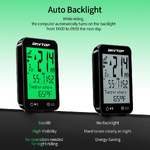
For 3 months I've had a $25 handlebar GPS. I got it for the altimeter, which uses a barometer because GPS is bad for altitude. In fact, its displayed altitude can be off more than 100 feet, but in showing how many feet I climb on a hill, it agrees approximately to the foot with what I've measured with a laser level.

How does the computer tell the difference between the tiny change in pressure from climbing one foot, and larger changes from air movement? I guess as I pedal up a hill, the computer uses statistical analysis to see a trend. That explains why for the first vertical 4 feet or so, it doesn't register, and it's catching up as I reach the top. It doesn't work when I'm on foot. I guess it's not programmed for such slow trends in pressure.

I find that I climb thousands of feet a week, around town.
 

Attachments

  • 71YElqwfQPL._AC_SL1500_.jpg.png
    71YElqwfQPL._AC_SL1500_.jpg.png
    893.2 KB · Views: 4
Last edited:
my garmin 1030+ does a good job its petty consistent. but lesser gamins were not as good. my Karoo 2 was so bad it was supposed to reset when the ride started but sometimes I was 100 feet below sea level. it seems better now. all I can really go by is consistency on the same routes.
 
my garmin 1030+ does a good job its petty consistent. but lesser gamins were not as good. my Karoo 2 was so bad it was supposed to reset when the ride started but sometimes I was 100 feet below sea level. it seems better now. all I can really go by is consistency on the same routes.
I see the 1030+ also uses a barometer. I'm about 810 feet, and my altitude typically reads about 710. If I could put in the local barometric pressure correction at the moment, like an airplane, it would probably be accurate.

Fifty years ago, I ran a refrigerator-sized computer to derive our position on the North Atlantic from Loran C signals. To get a precise position, it also had to compute our altitude. Sea level, right? No we might be on an ocean hill 15 meters high. I've read that on land, too, "sea level" has ups and downs. I don't understand it, but I've read that this makes it a problem for GPS to tell your altitude.
 
Back