Normally, spokes break near the nipple or at the bend. I had the heads pop off three ebike spokes. The heads were a little too small, and they went too deeply into the holes in the hub, which allowed the elbows to flex, which eventually snapped the heads.
When I assemble a bike, I'll take a test spin, then adjust the spokes, then take another spin. Usually, the handling feels better. When your weight is on the bike and the spokes come under tension (pointing up), looser spokes will let the rim move sideways toward the tighter ones. That can make handling less precise, and the metal fatigue will eventually break spokes.
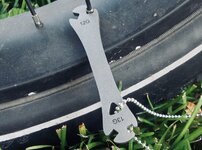
I prefer the kind of wrench pictured. With my fingers out of the way, I can better see which way to tighten or loosen. One opening will grip three corners of a nipple, which I prefer. The 4" handle makes it easy to see how far I'm turning a nipple. The wrench is also a dandy hammer to tap spokes so I can hear the tension. (On my new
Aventon I had to remove the reflectors to let all the spokes vibrate.)
Starting at the valve, I'll go around tightening dead spokes because it's the loose ones that allow movement. Pinching pairs together is another way to find loose ones. I loosen any whose high-pitched "pink" shows they are much tighter than the rest. The second time around, I adjust for roughly the same pitch.
Then I rest my hand against the fork or chain stay with the end of a finger lightly against the rim. I turn the wheel to see if my finger drags evenly all the way around. A six-inch sector of my new Aventon front wheel was slightly out of true, but it seemed to be less than 1mm, so I let it go. To fix it, I would have marked the sector with tape, taken half a turn off the spokes pulling the sector out of line, and tightened the opposite spokes half a turn. Then I would have adjusted for similar pitches and checked again for runout.
That rim is offset, with spokes on one side 3mm longer than those on the other.