Just for fun...

1787075109295.png
 
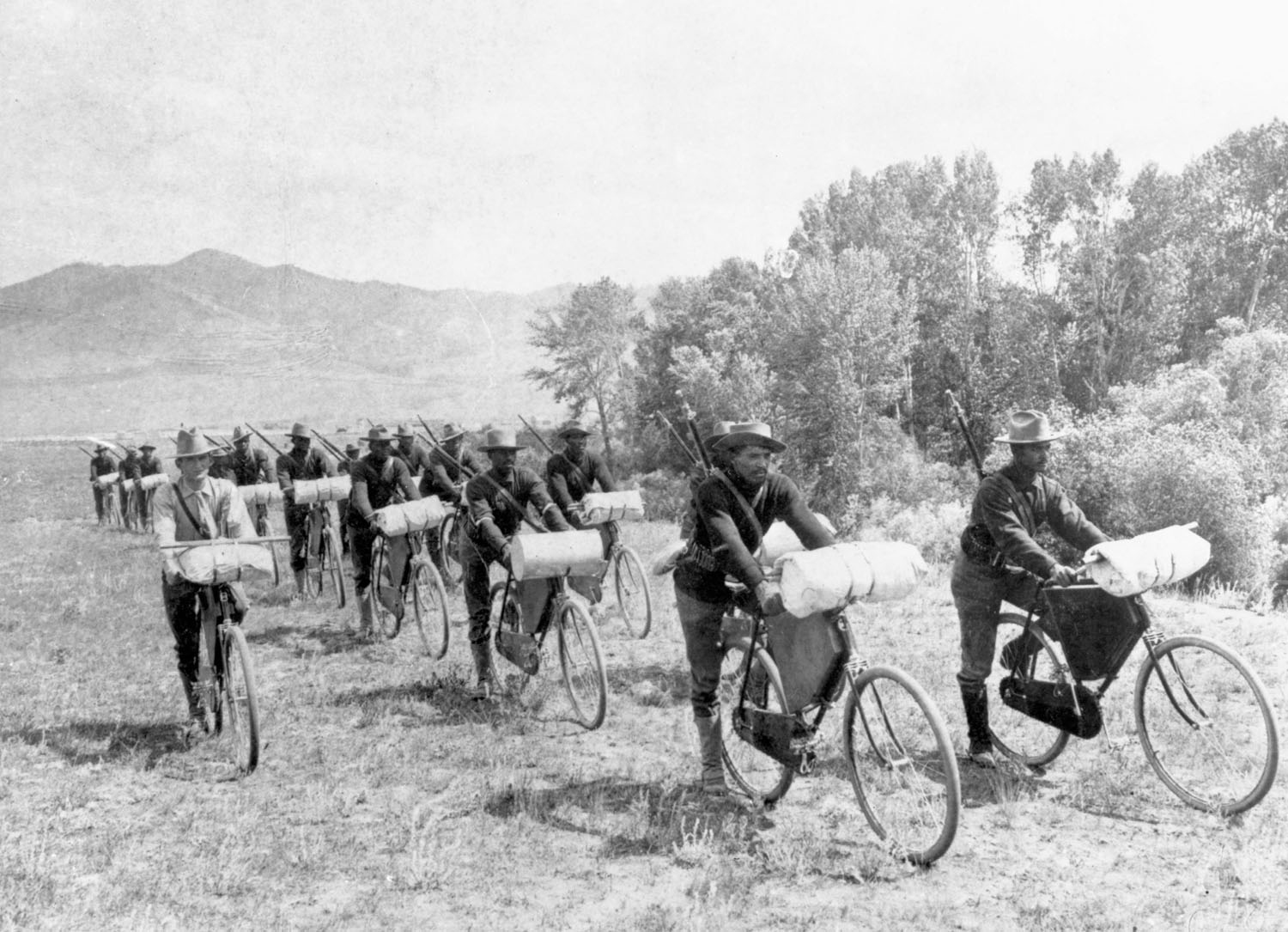
I studied about the history of mountain bikes and this is one of the roots that I had no idea about. A 1,900 mile off-road ride by 20 men in 1897 from Mazzola to St. Louis that was more efficient than riding horses.


Last edited:
This post is "just for fun" in the toy sense...

As both a cycling and LEGO nut with a special fondness for making LEGO spinning tops, hard to say what was more exciting about the recently released LEGO Road Bike (set 11380) — (a) building and playing with the bike, or (b) first making tops out of the wheels, freewheeling rear sprocket, chainring, and brake disks.

20260821_103747.jpg

The model's a pretty good likeness of a modern road racer. The juicy top-making parts I put to use here are currently available only in this set. More on the bike model here.

First, the tops
Ha, @DaveMatthews ! Beat you to calling these tops spin-offs from the bike set. This video shows some of them in action.


So far, I have the bike's floor stand, both wheels, and all the tops built. Sharing the tops now, as they'll have to be dismantled to finish the bike.

20260821_115106.jpg

Floor stand holding the completed front wheel before top adaptations.

~~~~~~~~~\\\\~~~~\\\\~~~~~~~~~

OPTIONAL: Nerding out on tops
Consider yourself warned.

I like making tops because (a) they're fun to design and play with, (b) they can be a form of kinetic art, and (c) I love things that turn out to be WAY more complicated than they look — especially from a STEM standpoint. Physics journal articles are still being written about spinning tops!

I like making modular LEGO tops in particular because I can draw on a catalog of tens of thousands of parts (not counting color variations) that someone else has to fabricate. Plus, the medium naturally lends itself to outside-the-box top designs.

Chainring and brake tops
Alone or in combination, the bike's chainring and brake disks make good rotors for small LEGO tops. See 6 of them spin at 0:16 in the video.

20260823_161027.jpg
20260823_160920.jpg

These quick and easy little tops use the bike's 64-tooth chainring and two 47 mm brake disks as rotors in any combination you like. All I added were central axles from the set and appropriate tip and stem parts from my stock.

20260822_122538.jpg

Thanks to LEGO's precision molding and uniform materials, these low-inertia tops spin without wobble. Two reasons: (1) They're effectively rigid for this purpose. (2) Their parts automatically balance and align in any arrangement with rotational or mirror symmetry.

20260823_161045.jpg

Chainring and single-disk brake tops at speed.

With a single practiced finger twirl, the chainring-only top stays up 15 sec. The single- and double-disk brake tops with no chainring stay up 18 and 20 sec, respectively.

20260822_123000.jpg

My visual favorite in this batch uses all 3 rotors, making it the heaviest at 14 g. Turns out, all tops involving the high-drag chainring stay up ~15 sec.

These spin times may sound short, but they're not bad for a low-inertia LEGO top of this geometry. And they're plenty long enough to deliver good play value (the fun factor).

Top aerodynamics
On smooth, hard surfaces, air resistance and gravity are the cyclist's greatest adversaries. Ditto for tops, where they limit both launch speeds and spin times.

No big surprise then that tops without the chainring stay up longer than tops using it — this despite having smaller rotational inertias and often similar center of mass (CM) heights.

Wheel tops
Both wheel tops use the tires, rims, spokes, and hubs as they go on the bike. The top adaptations involve only the axles.

20260822_105613.jpg

The bike's aero road wheels are 244 mm in OD at the tread. The modular rims are 24 mm deep, and the grippy one-piece rubber racing slicks are 12 mm wide at the rims. Real racing wheels have roughly similar proportions.

20260822_110038.jpg

These large aero wheels have huge appeal as top rotors. The rims and tires combine low rotational drag with very high rotational inertia per kg. And the top's overall CM can be kept very low to the ground. Together, these properties greatly prolong spin time.

High-performance front wheel top
Reworking the front axle into a suitable stem at one end and a low-friction tip at the other yielded a well-aligned, well-balanced, high-inertia, low-CM top (2:58 in the video) that spins with minimal to no wobble.

20260822_105428.jpg

Front wheel top with optional wind-up starter.

20260822_105438.jpg
20260822_105517.jpg

Front wheel top hub, tip, and stem details.

This high-inertia top weighs 125 g and stays up ~123 sec when spun up to ~350 rpm with repeated finger twirls. Spin time grows to ~160 sec when spun up to ~600 rpm with a powerful wind-up starter driven by 2 LEGO pull-back motors in series.

20260822_110009.jpg

This is a high-performance top by LEGO standards. Play value's also excellent, with or without a starter.

Freewheeling rear wheel top
This LEGO bike model may be more for display than play, but it does have a working single-speed drivetrain.

what-do-yall-think-of-this-new-clutch-gear-v0-2e1v4fnbu17h1.jpeg

The drivetrain's freewheeling action is provided by this "one-way gear", a part first available in this set.

20260823_121549.jpg

For the rear wheel top (left), I put this one-way gear to use in a freewheeling replacement for the fixed stem on the front wheel top on the right. See it spin at 5:00 in the video.

Why a freewheeling stem (FWS)? Because (a) it takes a bit of muscle and practice to start these high-inertia wheel tops with the unaided hand, and (b) an FWS does for a top exactly what a freewheeling drive axle does for a bicycle.

That means that you can twirl the FSW repeatedly to build up speed, letting go only to launch. This greatly improves ease of spin-up and hence play value without resorting to an external starter like the one used to spin up the front wheel top at 4:16. It can also increase spin time and reduce wobble by promoting, faster, cleaner, and more vertical launches.

20260823_115503.jpg

20260823_120615.jpg

The rear wheel top's improved FWS. At only 9 g, it's smaller, lighter, and much less wiggly than the original in the video. It raises the top's overall CM by less than 1 mm.

Result: A 134 g top that stays up ~130 sec with repeated twirls of its FWS. That's ~7 sec longer than the front wheel top with repeated twirls of its fixed stem. And the wobble seen in the video is all but gone.

Bottom line
When I first saw those bike wheels, I knew they had great top potential. My only questions were how hard they'd be to start by hand, how much they'd wobble, and how long they'd stay up.

Well, the answers are now in: The wheel tops are easy enough to start — especially with an FWS or external starter. The wobble's negligible to nonexistent with freewheeling stem improvements since the video. And the spin times are all over 2 minutes — even unaided.

This is exceptional performance for a LEGO top. If I can get the parts at reasonable cost, I'll definitely be duplicating the freewheeling rear wheel top for my collection.
 
Last edited:
This post is "just for fun" in the toy sense...

As both a cycling and LEGO enthusiast with a special fondness for making LEGO spinning tops, hard to say what was more exciting about the recently released LEGO Road Bike (set 11380) — (a) building and playing with the bike, or (b) first making tops out of the wheels, freewheeling rear sprocket, chainring, and brake disks.

View attachment 214549
The model's a pretty good likeness of a modern road racer. The juicy top-making parts I put to use here are currently available only in this set. More on the bike model here.

First, the tops
Ha, @DaveMatthews ! Beat you to calling these tops spin-offs from the bike set. This video shows some of them in action.


So far, I have the bike's floor stand, both wheels, and all the tops built. Sharing the tops now, as they'll have to be dismantled to finish the bike.

View attachment 214550
Floor stand holding the completed front wheel before top adaptations.

~~~~~~~~~\\\\~~~~\\\\~~~~~~~~~

OPTIONAL: Nerding out on tops
Consider yourself warned.

I like making tops because (a) they're fun to design and play with, (b) they can be a form of kinetic art, and (c) I love things that turn out to be WAY more complicated than they look — especially from a STEM standpoint. Physics journal articles are still being written about spinning tops!

I like making modular LEGO tops in particular because I can draw on a catalog of tens of thousands of parts (not counting color variations) that someone else has to fabricate. Plus, the medium naturally lends itself to outside-the-box top designs.

Chainring and brake tops
Alone or in combination, the bike's chainring and brake disks make good rotors for small LEGO tops. See 6 of them spin at 0:16 in the video.

View attachment 214551View attachment 214552
These quick and easy little tops use the bike's 64-tooth chainring and two 47 mm brake disks as rotors in any combination you like. All I added were central axles from the set and appropriate tip and stem parts from my stock.

View attachment 214554
Thanks to LEGO's precision molding and uniform materials, these low-inertia tops spin without wobble. Two reasons: (1) They're effectively rigid for this purpose. (2) Their parts automatically balance and align in any arrangement with rotational or mirror symmetry.

View attachment 214553
Chainring and single-disk brake tops at speed.

With a single practiced finger twirl, the chainring-only top stays up 15 sec. The single- and double-disk brake tops with no chainring stay up 18 and 20 sec, respectively.

View attachment 214555
My visual favorite in this batch uses all 3 rotors, making it the heaviest at 14 g. Turns out, all tops involving the high-drag chainring stay up ~15 sec.

These spin times may sound short, but they're not bad for a low-inertia LEGO top of this geometry. And they're plenty long enough to deliver good play value (the fun factor).

Top aerodynamics
On smooth, hard surfaces, air resistance and gravity are the cyclist's greatest adversaries. Ditto for tops, where they limit both launch speeds and spin times.

No big surprise then that tops without the chainring stay up longer than tops using it — this despite having smaller rotational inertias and often similar center of mass (CM) heights.

Wheel tops
Both wheel tops use the tires, rims, spokes, and hubs as they go on the bike. The top adaptations involve only the axles.

View attachment 214556
The bike's aero road wheels are 244 mm in OD at the tread. The modular rims are 24 mm deep, and the grippy one-piece rubber racing slicks are 12 mm wide at the rims. Real racing wheels have roughly similar proportions.

View attachment 214561
These large aero wheels have huge appeal as top rotors. The rims and tires combine low rotational drag with very high rotational inertia per kg. And the top's overall CM can be kept very low to the ground. Together, these properties greatly prolong spin time.

High-performance front wheel top
Reworking the front axle into a suitable stem at one end and a low-friction tip at the other yielded a well-aligned, well-balanced, high-inertia, low-CM top (2:58 in the video) that spins with minimal to no wobble.

View attachment 214559
Front wheel top with optional wind-up starter.

View attachment 214558View attachment 214557
Front wheel top hub and stem details.

This high-inertia top weighs 125 g and stays up ~123 sec when spun up to ~350 rpm with repeated finger twirls. Spin time grows to ~160 sec when spun up to ~600 rpm with a powerful wind-up starter driven by 2 LEGO pull-back motors in series.

View attachment 214560
This is a high-performance top by LEGO standards. Play value's also excellent, with or without a starter.

Freewheeling rear wheel top
This LEGO bike model may be more for display than play, but it does have a working single-speed drivetrain with the freewheeling action provided by is a "one-way gear" introduced for this set.

View attachment 214562
For the rear wheel top (left), I put this one-way gear to use in a freewheeling replacement for the fixed stem on the front wheel top on the right. See it spin at 5:00 in the video.

Why a freewheeling stem (FWS)? Because (a) it takes muscle and practice to start these high-inertia wheel tops with the unaided hand, and (b) an FWS does for a top exactly what a freewheeling drive axle does for a bicycle.

That means that you can twirl the FSW repeatedly to build up speed, letting go only to launch. This greatly improves ease of spin-up and hence play value without resorting to an external starter like the one used to spin up the front wheel top at []. It can also increase spin time and reduce wobble by promoting, faster, cleaner, and more vertical launches.

View attachment 214563
View attachment 214564
The rear wheel top's improved FWS. At only 9 g, it's smaller, lighter, and much less wiggly than the original in the video. It raises the top's overall CM by less than 1 mm.

Result: A 134 g top that stays up ~130 sec with repeated twirls of its FWS. That's ~7 sec longer than the front wheel top with repeated twirls of its fixed stem. And the wobble seen in the video is all but gone.

Bottom line
When I first saw those bike wheels, I knew they had great top potential. My only questions were how hard they'd be to start by hand, how much they'd wobble, and how long they'd stay up.

Well, the answers are now in: The wheel tops are easy enough to start — especially with an FWS or external starter. The wobble's negligible to nonexistent with freewheeling stem improvements since the video. And the spin times are all over 2 minutes — even unaided.

This is exceptional performance for a LEGO top. If I can get the parts at reasonable cost, I'll definitely be duplicating the freewheeling rear wheel top for my collection.

That is hilariously interesting! :eek: :cool:
Hilarious because you instantly found an alternate and extremely creative use for the kit.
Interesting because things have changed MASSIVELY since I last experienced LEGO in any shape or form. The level of intricacy now is fantastic!
Kudos mate, that is very very cool...😍
 
That is hilariously interesting! :eek: :cool:
Hilarious because you instantly found an alternate and extremely creative use for the kit.
Interesting because things have changed MASSIVELY since I last experienced LEGO in any shape or form. The level of intricacy now is fantastic!
Kudos mate, that is very very cool...😍

The mechanical engineering side of LEGO has become an experimenter's and tinkerer's and closet engineer's dream. Grew exponentially from the Technic line introduced in the 1970s.Thousands of well-engineered, high-precision mechanical parts by now.

I usually don't buy sets, just parts. If you have the imagination and a sense for how machines work, no end to the working gizmos you can dream up and actually build with LEGO these days. Not from sets, but from loose parts.

I like to make mechanical toys with real play value. Here's one of my more outside-the-box gizmos...

 
Back