livall-loen
New Member
- Region
- USA
Hi everyone,
I’m with the LIVALL team, so full disclosure: we work on both smart helmets and e-bike technology. Rather than turning this into a product pitch, I’d like to ask a broader question about cycling technology.
Which smart features actually make riding better — and which ones are mostly unnecessary?
When people talk about cycling technology, the conversation often starts with power, speed and range.
Those things obviously matter, especially with e-bikes.
But I think there is another interesting side to the discussion: visibility, communication and rider awareness.
Cars have brake lights, turn signals, mirrors and increasingly sophisticated driver-assistance systems.
Cyclists traditionally have much less built-in communication with the traffic around them. We rely heavily on hand signals, basic lights and our own awareness.
That creates an interesting opportunity for cycling technology — but it also creates the risk of adding features simply because they are possible.
Some examples I’m curious about:
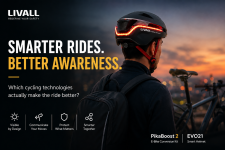
At LIVALL, these are questions we think about when working on products such as our smart helmets and PikaBoost 2 e-bike conversion system.
But being involved in the product side also means we’re obviously not neutral, which is exactly why I’m interested in hearing from experienced riders here.
I’d especially like to know:
If you could choose only three pieces of cycling technology to keep, what would they be?
And on the other side:
Which “smart cycling” features have you tried that turned out to be more gimmick than genuinely useful?
For me, the best technology should probably disappear into the ride most of the time and only become noticeable when you actually need it.
I’d be interested to hear where everyone here draws that line.
Thanks for the feedback — critical opinions are welcome as well.
— LIVALL Team
I’m with the LIVALL team, so full disclosure: we work on both smart helmets and e-bike technology. Rather than turning this into a product pitch, I’d like to ask a broader question about cycling technology.
Which smart features actually make riding better — and which ones are mostly unnecessary?
When people talk about cycling technology, the conversation often starts with power, speed and range.
Those things obviously matter, especially with e-bikes.
But I think there is another interesting side to the discussion: visibility, communication and rider awareness.
Cars have brake lights, turn signals, mirrors and increasingly sophisticated driver-assistance systems.
Cyclists traditionally have much less built-in communication with the traffic around them. We rely heavily on hand signals, basic lights and our own awareness.
That creates an interesting opportunity for cycling technology — but it also creates the risk of adding features simply because they are possible.
Some examples I’m curious about:
- Turn signals — useful additional communication or unnecessary complexity?
- Automatic brake lights — genuinely useful in traffic?
- Better front and rear visibility — more important than most other “smart” functions?
- Fall detection / emergency alerts — valuable safety backup or something most riders would never use?
- Bluetooth communication — useful when riding with others?
- Navigation prompts — helpful or distracting?
- Electric assistance — where should technology stop interfering with the natural feel of riding?
- Connected devices — does having the helmet and bike equipment communicate with each other actually add value?
At LIVALL, these are questions we think about when working on products such as our smart helmets and PikaBoost 2 e-bike conversion system.
But being involved in the product side also means we’re obviously not neutral, which is exactly why I’m interested in hearing from experienced riders here.
I’d especially like to know:
If you could choose only three pieces of cycling technology to keep, what would they be?
And on the other side:
Which “smart cycling” features have you tried that turned out to be more gimmick than genuinely useful?
For me, the best technology should probably disappear into the ride most of the time and only become noticeable when you actually need it.
I’d be interested to hear where everyone here draws that line.
Thanks for the feedback — critical opinions are welcome as well.
— LIVALL Team