Can a hydraulic brake line have invisible damage?

That reminds me... The OE were resin.
I ordered semi-metalic to see if I liked them.

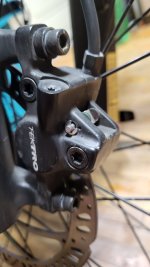
IIRC, you and I have the same Tektro brakes?

I've only ever used the OE Tektro brake pads,..


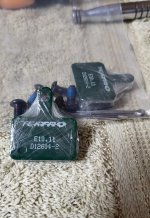
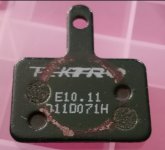
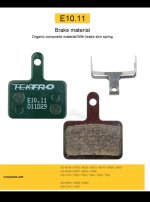
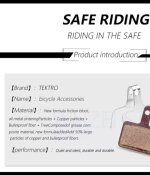
This is what I found out about the OE brake pads,..

Sounds like they're semi-metallic resin pads??

You can see all the chunks of copper and bullet proof fiber in the pad,..


Screenshot_20260714_222503_Gallery.jpg
 

Attachments

  • 20260714_220620.jpg
    20260714_220620.jpg
    420.5 KB · Views: 6
  • 20260714_221113.jpg
    20260714_221113.jpg
    152 KB · Views: 5
  • Screenshot_20250119-125906_Gallery.jpg
    Screenshot_20250119-125906_Gallery.jpg
    94.9 KB · Views: 6
  • Screenshot_20250119-132338_AliExpress.jpg
    Screenshot_20250119-132338_AliExpress.jpg
    104 KB · Views: 7
  • Screenshot_20250119-125219_AliExpress.jpg
    Screenshot_20250119-125219_AliExpress.jpg
    91.9 KB · Views: 6
True, but he could also cocked the olive. I get KISS, no problem with that. 3 years of age on mineral oil is still three years on oil that retains water. Changing it is not overkill, and it lets you inspect the system, especially when he has different brake problems on each side.

No worries, I won't be working on your bike anytime soon. 😁
Anything is possible.. especially with the tool in question.
Honestly I'd be more than happy to read he took it all apart and back together with 3 in 1 oil. I need a good laugh. 🙃
I know what's recommended but I have 3 years and 11k mi on my brakes and last checked they are working perfectly and the fluid is near the original pink color. Mineral oil does not absorb water like the DOT can and Imo, the replace every 1-2 years is bs.
There should be some sign of loss of performance if worn or contaminated and I fall into the camp of don't fix what ain't broke on this one.
 
I get bikes that come in with no stopping power and the levers go back against the grips. The lower fluid is black. I would like to be able to store fluid in a slight vacuum that would preremove dissolved gasses. In a couple days I will be installing a set of four piston hydros on a bike currently with sucky mechanical brakes but will take shortening the hoses. The owner broke his ankle and decided that stopping could be a good thing.
 
I get bikes that come in with no stopping power and the levers go back against the grips. The lower fluid is black. I would like to be able to store fluid in a slight vacuum that would preremove dissolved gasses. In a couple days I will be installing a set of four piston hydros on a bike currently with sucky mechanical brakes but will take shortening the hoses. The owner broke his ankle and decided that stopping could be a good thing.
So there are symptoms and signs of a poorly maintained/worn system. But I'd address it at first sign, not total failure.
I don't think a vacuum is necessary, just don't agitate the bottle before use. But I guess you could put it in a mason jar and use a Foodsaver vacuum.
 
IIRC, you and I have the same Tektro brakes?

I've only ever used the OE Tektro brake pads,..


This is what I found out about the OE brake pads,..

Sounds like they're semi-metallic resin pads??

You can see all the chunks of copper and bullet proof fiber in the pad,..
Now I remember. I bought semi-metallic because I the Tektro pads on my Abound seemed different from those on my 2 Rad bikes, even though they were all marked E10.11, like yours. For one thing, the E10.11 pads on the Rads could soften in prolonged high humidity. They lost braking power, wore very fast, and left bumps on disks.

This page says resin pads lose their grip in rain. I had no trouble in rain, only in periods of wet nights. It hasn't been a problem with the E10.11 pads on the Abound or the replacement resin pads on the Radmission.

It says resin pads produce less heat. I doubt that. A certain amount of braking will produce a certain amount of heat. It says sintered pads need to warm up to have a good coefficient of friction. That may explain why when I've tested semi-metallic pads, they worked poorly for the first couple of tries. That points to resin for me, due to visual obstructions in town. I'll ride slowly with fingers on levers because I may not have milliseconds to spare.
 
One thing I found on my Shamans as the caliper wore out is I would get a little squeal with the normal pressure I use most of the time, no matter how clean the rotor was or pads, even when they were all new. Then the caliper started leaking. I replaced it and no more squeal. This has happened on two bikes now: our tandem, then my Trek. But that took about 18k miles.


I was able to compare rotor sizes now too since all three of my bikes have pretty close to the same brake config with different rotors. My tandem takes the most effort to slow on the 20% grade and it has 203mm rotors. But my analog commuter with 160mm rotors is pretty close to the same and it is far lighter. My Trek with 180s is the easiest.
 
Back