Brake bleeding without bleeding ports

GaSo

New Member
Region
Europe
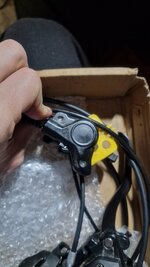
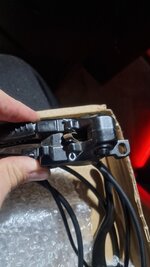
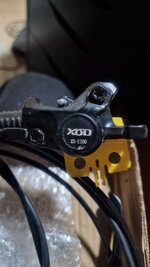
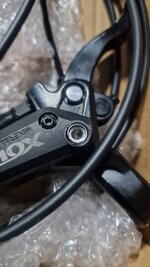
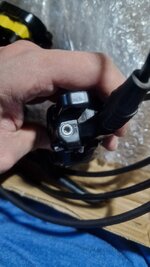
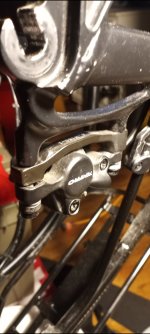
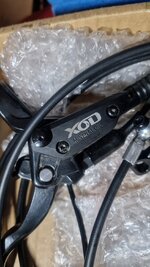
Hi, do anyone know if is possible to bleed this brakes? I don't see any bleeding ports. It's Xod XD E-300 brakes.
I neeeded to take off hose from lever and now when I put it back it is sponge and don't brake at all. I don't see any bleeding port on lever or caliper. Can I do something with it? Is it possible somehow bleed it or it is trash now?
 

Attachments

  • 20240604_201008.jpg
    20240604_201008.jpg
    203.9 KB · Views: 549
  • 20240604_200952.jpg
    20240604_200952.jpg
    145.6 KB · Views: 434
  • 20240604_200947.jpg
    20240604_200947.jpg
    144.6 KB · Views: 427
  • 20240604_200939.jpg
    20240604_200939.jpg
    131.4 KB · Views: 504
Yes you were right, that was it. I wasn't sure because it has very small thread head.
Also I'm blind...I found port on caliper as well.
Thank you very much.
 

Attachments

  • 20240605_223055.jpg
    20240605_223055.jpg
    175.6 KB · Views: 595
  • 20240605_224231.jpg
    20240605_224231.jpg
    149.9 KB · Views: 487
me too. usually its a nipple on the caliper. thats going to be a pain. not sure how your going to add fluid in that but then put the plug back in.
 
I’ve overhauled, rebuilt and installed a lot of hydraulic brakes on every vehicle imaginable, the ones on your bike ( if hydraulic) are just a smaller version of what is on your car, minus a bleed nipple. Here is how to bleed these . Fill the mineral oil up at the master cylinder part ( by the lever) put the screw back in. Squeeze the brake lever and hold or wrap a elastic cord to keep pressure on the lever. Loosen the screw ( slightly) on the caliper. If you see slight/ tiny bubbles with fluid trying to escape past the screw then your on the right track. Close the screw on the caliper. Remove the screw at the lever to add more mineral oil, repete. If you still can’t get a hard lever, I’d remove the caliper, stick something about the same thickness as the disc brake rotor between and tape in place so it can’t fall out. Elevate the caliper above the lever/ master cylinder. Squeeze lever and hold, loosen the caliper bleed screw only slightly. At this point you should see bubbles trying to escape past the caliper bleed screw threads. Close the caliper screw. Lower the caliper, fill master cylinder w/ mineral oil, reinstall fill screw. Again elevate the caliper. Squeeze lever and hold. Bleed caliper screw again. Repete untill lever is hard. You could leave the caliper elevated overnight with lever tied w/ elastic cord to keep pressure on it. Loosen bleed screw ( slightly) and you should see bubbles. Not responsible if you mess something up. If your not sure of your capabilities, take your bike to a shop.
 
I’ve overhauled, rebuilt and installed a lot of hydraulic brakes on every vehicle imaginable, the ones on your bike ( if hydraulic) are just a smaller version of what is on your car, minus a bleed nipple. Here is how to bleed these . Fill the mineral oil up at the master cylinder part ( by the lever) put the screw back in. Squeeze the brake lever and hold or wrap a elastic cord to keep pressure on the lever. Loosen the screw ( slightly) on the caliper. If you see slight/ tiny bubbles with fluid trying to escape past the screw then your on the right track. Close the screw on the caliper. Remove the screw at the lever to add more mineral oil, repete. If you still can’t get a hard lever, I’d remove the caliper, stick something about the same thickness as the disc brake rotor between and tape in place so it can’t fall out. Elevate the caliper above the lever/ master cylinder. Squeeze lever and hold, loosen the caliper bleed screw only slightly. At this point you should see bubbles trying to escape past the caliper bleed screw threads. Close the caliper screw. Lower the caliper, fill master cylinder w/ mineral oil, reinstall fill screw. Again elevate the caliper. Squeeze lever and hold. Bleed caliper screw again. Repete untill lever is hard. You could leave the caliper elevated overnight with lever tied w/ elastic cord to keep pressure on it. Loosen bleed screw ( slightly) and you should see bubbles. Not responsible if you mess something up. If your not sure of your capabilities, take your bike to a shop.
Hello, I am currently having the same problem with this style of hydraulic brakes. It would be great if you could offer me some advice regarding my brake situation.

My rear brake is extremely squishy, even after extensive lever bleeding and holding the bike vertically, and pumping the brake. However, it at least does work for a very brief period when I pump my brakes a few times. Before I loosen the screw on the caliper slightly, should I pump the brake first to build pressure, or squeeze the lever once and hold it there?

Before reading your comment, I thought I had to remove the screw all the way, after reading your comment, you relieved so much hassle for me.
 
My rear brake is extremely squishy, even after extensive lever bleeding and holding the bike vertically, and pumping the brake.

It sounds like you've got a bubble trapped in your brake line?


Try removing the caliper from the frame and laying it on the floor under your ebike so that the brake line is only going uphill.

Then roll the caliper around in your hand to get any bubbles that might be trapped behind a brake piston to "rise up" into the brake line and up into the reservoir.
Do all this while pumping the brake lever like crazy to help break up any bubbles that might get stuck somewhere.

Leave the reservoir filler cap closed.
Bubbles will rise up into the reservoir on their own with the filler cap closed.


Post in thread 'Calipers That Will Not Adjust Straight' https://forums.electricbikereview.c...at-will-not-adjust-straight.57273/post-672252
 
It sounds like you've got a bubble trapped in your brake line?


Try removing the caliper from the frame and laying it on the floor under your ebike so that the brake line is only going uphill.

Then roll the caliper around in your hand to get any bubbles that might be trapped behind a brake piston to "rise up" into the brake line and up into the reservoir.
Do all this while pumping the brake lever like crazy to help break up any bubbles that might get stuck somewhere.

Leave the reservoir filler cap closed.
Bubbles will rise up into the reservoir on their own with the filler cap closed.


Post in thread 'Calipers That Will Not Adjust Straight' https://forums.electricbikereview.c...at-will-not-adjust-straight.57273/post-672252
I have already tried removing the calipers from the bike and positioning them at the lowest position multiple times, but sadly, it's not working this time. I will try loosening the screw slightly to remove air, and if that does not work, I plan to do a full bleed from the caliper to the lever oil pushing method
 
I remember reading about a particular caliper (a four piston one I think?) where you had to bleed the caliper a certain way (how you just mentioned I think?), because it would get bubbles trapped behind the piston. (I think😁)

Something like that anyway. 😁

Maybe try pushing your pistons back into the cylinder bore to help push any bubbles out.
While holding the caliper at the appropriate angle to feed the bubbles "upward"?

(I just made that up. I have no idea if it will work, but it's easy enough to try.)
 
,.. I plan to do a full bleed from the caliper to the lever oil pushing method


I also remember reading about how the tube that connects the oil plunger to the brake caliper can blow off of the connector and make a big Fricken mess, then you have to start over.

So keep that in mind.
(I think 🤔? I'm not quite sure. 😁)
 
Using a two syringe method is best for tricky bleeds like this. Use a kit and adapters that fit the lever and the caliper. ALWAYS remove the brake pads before bleeding and use a proper brake block to hold the pistons open.
 
I have already tried removing the calipers from the bike and positioning them at the lowest position multiple times, but sadly, it's not working this time. I will try loosening the screw slightly to remove air, and if that does not work, I plan to do a full bleed from the caliper to the lever oil pushing method
When you do a lever bleed to remove trapped air you need to remove the screw from the lever completely, install a funnel in the port and fill it half way with fluid.
*Do NOT loosen the screw on the caliper.*
Try to position all in as much as possible straight line and vertically. As you squeeze the lever tap the handle, line and caliper to knock bubbles loose.
Be patient and take a break if necessary.. and continue until you don't see any more bubbles rising in the funnel. Wait 15 minutes and repeat to be positive all air is out. Then be careful to remove the funnel and install the lever port screw without introducing any air.


Watch Syd... She's a bit of a tool.. but kinda cute as well.
 
Last edited:
Using a two syringe method is best for tricky bleeds like this. Use a kit and adapters that fit the lever and the caliper. ALWAYS remove the brake pads before bleeding and use a proper brake block to hold the pistons open.
Yes, that is my last resort plan if I can't get the brake firm by loosening the caliper screw after removing the air. BTW wouldn't it also be fine to use the cup on the lever side?
When you do a lever bleed to remove trapped air you need to remove the screw from the lever completely, install a funnel in the port and fill it half way with fluid.
*Do NOT loosen the screw on the caliper.*
Try to position all in as much as possible straight line and vertically. As you squeeze the lever tap the handle, line and caliper to knock bubbles loose.
Be patient and take a break if necessary.. and continue until you don't see any more bubbles rising in the funnel. Wait 15 minutes and repeat to be positive all air is out. Then be careful to remove the funnel and install the lever port screw without introducing any air.


Watch Syd... She's a bit of a tool.. but kinda cute as well.

I have already tried this multiple times, first with a cup on the lever and then with a syringe(only on the lever) on the 2nd and 3rd attempts, so the only thing left is dealing with the caliper.

PS, I agree she is very cute
 
The cup method is a one way bleed. It's the recommended way to bleed Shimano brakes, and works fine most of the time. However, some brakes are tricky, and the manufacturer recommends a two syringe bleed. This is a two way bleed. The advantage is that by having a syringe on the lever, the fluid can be pushed down using hydraulic force at the lever, instead of gravity and pull force from the caliper syringe. This can free up stuck air bubbles that will be removed when the caliper syringe is pushed. Magura and Promax are two manufacturers that recommend this method.

She doesn't do a thing for me, and her partner is creepy.
 
I’m pretty sure there’s no bleed screw on my brake block. I’m glad the OP found one, but if you don’t have one, you need to use the syringe to force the mineral oil in and do the pumping that Santa and Gionni described. It took me a while to figure this out, but any brake kit will have the syringe so you can apply positive pressure to the oil at the handle screw.

Also, I agree with stomp that you want to make sure you’ve got the brake mounted or use a pad block (should be in the kit) to do the fill.
 
Yes, that is my last resort plan if I can't get the brake firm by loosening the caliper screw after removing the air. BTW wouldn't it also be fine to use the cup on the lever side?


I have already tried this multiple times, first with a cup on the lever and then with a syringe(only on the lever) on the 2nd and 3rd attempts, so the only thing left is dealing with the caliper.

PS, I agree she is very cute
Well I don't agree with the syringe at the lever to do a lever bleed. I would try the cup one more time and be patient. The double syringe will probably work but can be a bit more messy as well as requiring you to be very conscious of procedure or you can introduce more air.

. Magura and Promax are two manufacturers that recommend this method.
I guess this is another advantage of Magura like non replaceable sensors and brittle composite levers 🙃
She doesn't do a thing for me, and her partner is creepy.
awww c'mon..... I could see those ponytails tied like a bbq apron 🤔
 
Well I don't agree with the syringe at the lever to do a lever bleed. I would try the cup one more time and be patient. The double syringe will probably work but can be a bit more messy as well as requiring you to be very conscious of procedure or you can introduce more air.


I guess this is another advantage of Magura like non replaceable sensors and brittle composite levers 🙃
True. I use rubber straps to keep the syringes upright and prevent air incursion.

Agreed on the Carbotec or whatever Magura calls their composite levers and clamps. Way too brittle.
 
I’m pretty sure there’s no bleed screw on my brake block. I’m glad the OP found one, but if you don’t have one, you need to use the syringe to force the mineral oil in and do the pumping that Santa and Gionni described. It took me a while to figure this out, but any brake kit will have the syringe so you can apply positive pressure to the oil at the handle screw.

Also, I agree with stomp that you want to make sure you’ve got the brake mounted or use a pad block (should be in the kit) to do the fill.
I couldn't find mine, but I was able to locate it after seeing the OP's picture. It may be hidden by the screw that holds the brake to the frame.
Well I don't agree with the syringe at the lever to do a lever bleed. I would try the cup one more time and be patient. The double syringe will probably work but can be a bit more messy as well as requiring you to be very conscious of procedure or you can introduce more air.


I guess this is another advantage of Magura like non replaceable sensors and brittle composite levers 🙃

awww c'mon..... I could see those ponytails tied like a bbq apron 🤔
I just used the method Santa told me, and the brake works like a charm!. The lever bleed didn't seem worth it after doing it 3 times....
 
Also, I agree with stomp that you want to make sure you’ve got the brake mounted or use a pad block (should be in the kit) to do the fill.

I actually anecdoteally tested that to see what would happen.
(It started as an accident and turned into an experiment)

With my brakes,.. if I removed the wheel and left the pads in the caliper I could squeeze my ~½ worn pads tightly together without blowing out a piston.
Even when I pressed both pads towards one piston.

I had to push the pistons back in to get the wheel back on, but that's good practice anyway.

And of course, your mileage and spillage will vary,..
 
My rear brake is extremely squishy, even after extensive lever bleeding and holding the bike vertically, and pumping the brake.

I worked for me, in fact too well, and the lever was so firm that I couldn't activate the brake switch without activating the brakes, and I couldn't modulate the braking force comfortably.

I pushed then pulled on the rotor at the caliper to back off each piston a bit and fixed my brakes in 30 seconds at the side of the road and left my dirty fingerprints all over the rotor as evidence. 😁

I dialed it in at semi-squishy with about half a lever sweep from 0 to skidding or tossing myself over the handlebars.

I'm not going to clean my rotors because my ebike is always dirty and she gets even worse when she gets into the alcohol. 😁
 

Attachments

  • Screenshot_20250113-083219_Gallery.jpg
    Screenshot_20250113-083219_Gallery.jpg
    131.2 KB · Views: 7
Last edited:
Back