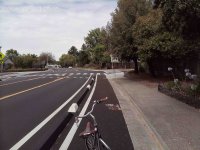
What Streets Should Look Like

PedalUma

Well-Known Member
Region
USA
City
Petaluma, CA
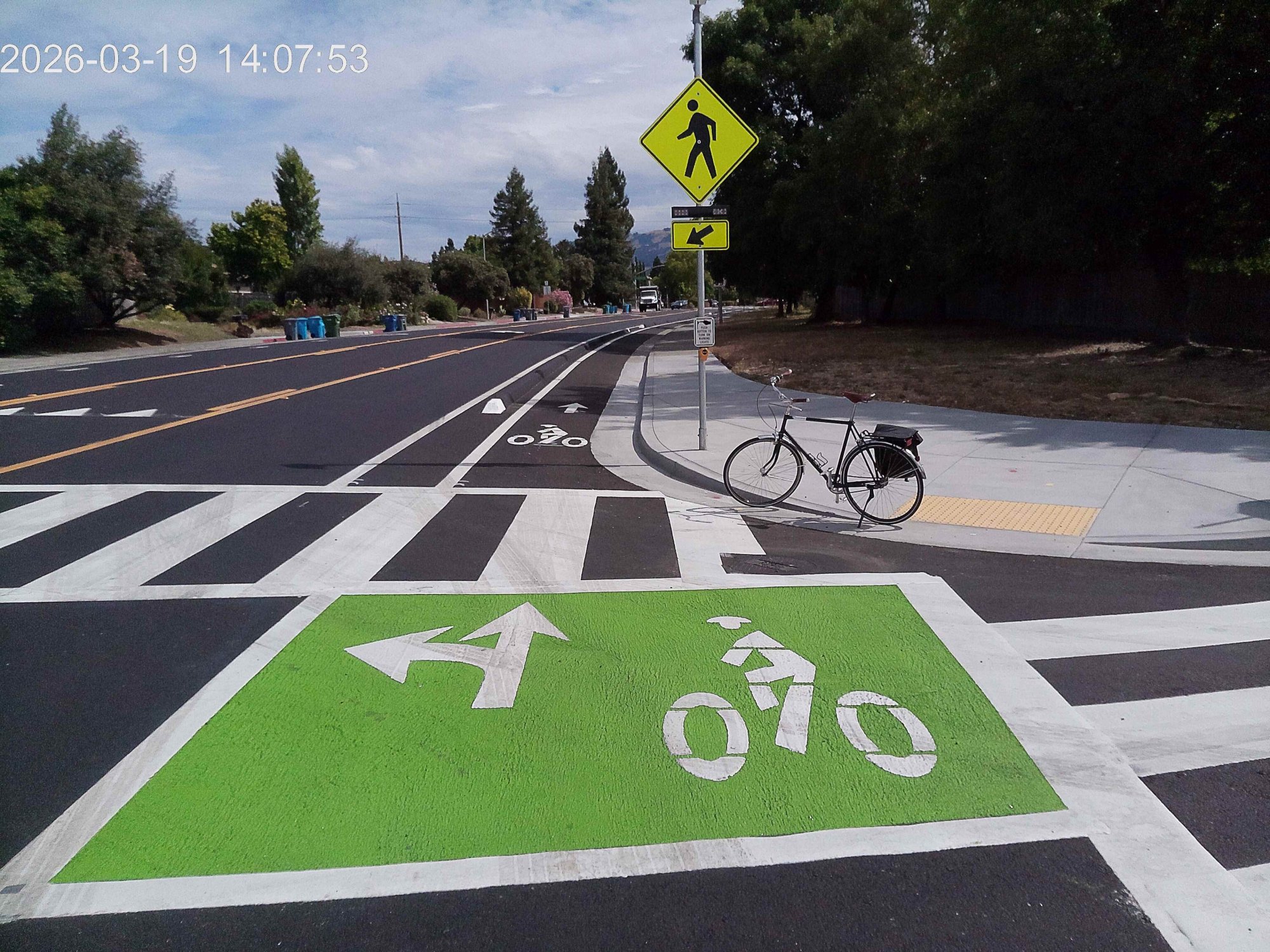
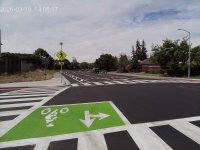
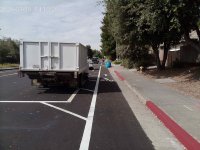
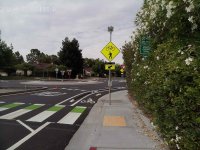
This is what streets should look like. It was four car lanes with parked cars on both sides. There was no space for bikes and the risk of getting doored. The cars were doing 50 mph and no crosswalks. This can happen for your town. Build it and they will come. A four-way stop was replaced by a roundabout.
1784569231595.jpeg
 

Attachments

  • What Streets Should Look Like b.jpg
    What Streets Should Look Like b.jpg
    523.1 KB · Views: 13
  • What Streets Should Look Like c.jpg
    What Streets Should Look Like c.jpg
    646.9 KB · Views: 13
  • What Streets Should Look Like d.jpg
    What Streets Should Look Like d.jpg
    678.2 KB · Views: 14
  • What Streets Should Look Like e.jpg
    What Streets Should Look Like e.jpg
    688.4 KB · Views: 12
Except that the bike lanes are mostly just paint and can easily be invaded by multi-ton murder machines at literally any moment.

We can do much better than that:

I will take another photo. The intersections are like in that video. They extend way out for cyclists and have flashing yellow lights with offset cross walks with white and green. The new roundabout is nice. It is faster than stopping, traffic calming, and feels safe. And where parked cars are not blocking traffic from bikes there are at least curbs to seperate cars from bicycles.
 
I'm afraid Uma you even have no clue what a proper bike infrastructure is.

1784624000083.png

1784624649355.png

1784624958360.png

It all starts with a separate bike path that is totally independent of the traffic.

1784624718193.png

This bike path runs at a lower level of the bridge. The traffic moves a level above.

1784624827087.png

Traffic separated from bicycles and e-scooters and again separated from the sidewalk/pavement.

1784625379876.png

A MUP bridge (mostly used by cyclists).

When it comes to roundabouts, the dedicated bike path runs around the traffic circle independently.
 
Last edited:
The difference between cycling infrastructure in Europe and America comes down to public perception and acceptance.

In Europe, the bicycle was embraced early as a form of transportation. European urban areas have the same, and some would say greater infrastructure challenges as America, but they understand that it's just common sense to separate motor vehicle traffic from other vulnerable road users, so they find a way to do it. They also understand that you can't put a separate path everywhere, interaction is inevitable, and respect is given. Families generally have one motor vehicle, but everyone, no matter what their age, that can ride a bicycle has one. They are used almost daily for commuting and running errands.

In America, the bicycle is viewed, at best, as a toy, and at worst, a menace by anyone that does not ride one regularly, which is the vast majority of the population. The introduction and expansion of rail trails have been a brilliant way to build a separate infrastructure, but they cost a lot of money to build, and require constant maintenance, just like roads. However, they are the equivalent of the interstate highway system. They can get you safely from one town to the next, but eventually, you need to get off of them, and that's when the problems show up. Urban bicycle infrastructure was jammed down the taxpayer's throats. Taking lanes for bicycles in crowded urban areas is insane. Those painted lines offer zero protection, increase congestion, and create rage for the motor vehicle operators. For the most part, the "safe space" is ignored by standing motor vehicles, rideshare drivers, and delivery trucks, forcing the rider out into the very traffic that they were designed to avoid. That rage has driven complacency. Whenever a rider is maimed or killed by a motor vehicle, it's always the rider's fault. The first question that is always asked is, "Were they wearing a helmet?", as if that had anything to do with how the incident occurred. In short, bicycles are not viewed as a legitimate form of transportation. The introduction of electric scooters, skateboards, and motorcycles has only made everything worse.

Nothing will change in America until the general public accepts bicycles as a shared road user because they are a legitimate form of transportation. If every motor vehicle on the road was replaced with an EV, nothing changes. It's what's inside the head of the driver that counts, not the vehicle.
 
...and create rage for the motor vehicle operators.
I think that if someone is so emotionally immature and unregulated that they become enraged when another road user inconveniences them then they shouldn't have a drivers license at all and be forced to walk everywhere.

We live in a horrifically broken society where we treat such bizarre behavior as "normal."
 
We have our own share of road rage in Poland. I'm glad the cycling infrastructure has been built and it is growing in my country.
We have self-entitled cyclists as well. Those are guys who believe bike paths have been made to "throw the cyclists off the road" and who actually treat the bike path as a vice. Unruly cyclists add to the road rage phenomenon. (All in the situation we have a lot suburban asphalt roads with a minimum traffic that can be successfully used for road cycling workouts!)

There is a special thing about the "cycling passage" across the road specifically in Poland. Marked with a wide red strip flanked with white, these do not give the cyclist priority at all. Many drivers yield; some even speed up there. The only reasonable way to cross such a passage is to stop your bike and observe. Do not and your survival chances dramatically diminish.
 
Last edited:
@stompandgo, Is correct. Bicycles are seen as a toy. Taking a road from four lanes for cars down to two is hated. Any change, even for the better of a neighborhood, is objected by those who are nostalgic for a fictional time that never existed.

 
It's thought of as a toy because for the most part in the US it is. The landscape in the US is much different and much more wide spread than it is in Europe and so is economic mobility. In the 28 years I was in the workforce there were very few instances where commuting by bicycle would have been even remotely practical. This presumed drawback allowed me to have more time to do more pleasurable things of my choice, retire at the age of 43 and travel the world. As bike users, we are the minority and I'm not bitter about it.
Sure as I get older I appreciate the more simpler things... but if that's all I ever had, I'd still be working at age 60+
I believe some of you wanting your cake and to eat it too is delusional.
 
Last edited:
Back