mschwett
Well-Known Member
- Region
- USA
i was surprised to see a while back that the "new" version of the mahle x20 was being rolled out to older bikes - everything but the UDH support, of course, since that's a physical thing.

 bikerumor.com
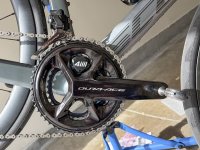
i have a scott addict eRide with the x20. it's a nice bike, but certainly not the bike for someone who wants to go fast up steep hills as @Yako reported in his excellent testing. it suits me better than most of the more powerful mid drive road e-bikes though, as it is so very similar to my non electric road bike, down to the exact same crank, cassette, etc etc. the frame geometry is pretty close, i have the same saddle, they both have a one piece cockpit, similar carbon wheels and the same tires. i'm waiting to try the scott fastride with the new TQ motor, which may be even better yet, and is a few lb lighter.
so, i was interested to see if the update really made much difference. no super scientific testing here, just a ride up my commute home hill twice in the same day, once before, once after the firmware update. sadly the data exported by the mahle ride portal is really crappy, with samples only every 5 to 7 seconds, so i had to resort to AI to extract more granular data from screen capture videos of the app.
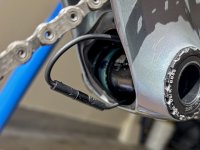
firstly, and i've mentioned this before, the bottom bracket "power meter" in the x20 system is junk - at least, MINE is. they claim something like 5% accuracy but it's way off. both my road bikes have the same 4iiii precision dual sided power meters, and i know from 15,000+ miles of riding, tracking heart rate, looking at the data of hundreds of rides that the numbers produced by the 4iiii units are basically correct. here's a comparison of the x20 data to the 4iii data. these are smoothed to a couple seconds because it's even more useless otherwise. if you shift the blue line up 25-30 watts, it starts to approximate the red line in a few spots, but it's junk data, basically. a couple possibilities - mine isn't working right (i have swapped the crank a few times), it isn't properly discriminating or combining left and right legs, or maybe it's just a bad system. given that the whole bottom bracket with torque and cadence sensor costs $200 and just one half of the 4iiii unit costs more than that, it makes sense that it's not great, i suppose. if it was that easy, every power meter for a road bike would be some little gizmo in the bottom bracket.

so, with the big caveat that the mahle "rider power" data is near useless, here's a comparison of rider and motor power for the same short but fairly steep hill (10% average grade, max 15%) before and after the update.

the chart is a little hard to read, but the bottom line - it does provide more power at pretty much every speed. i didn't match my efforts all that well (the thin red line is higher than the thin blue line by 10 watts or so) but the average multiplier of rider to motor power is about 10% higher, and the peak power is more like 20 percent higher. overall, very cool that mahle rolled this out to everyone with the x20. the update was painless, just tapped check for update on my phone and then hit update, waited a few minutes, and done. since this is a hub drive, you can't reach peak power at such low speeds. i imagine on a slightly lesser hill (6-8%) it would be possible to peg the motor at the 240+ mechanical watts advertised.
All Mahle X20 Systems Get More Power & Torque w/ Firmware Update, New Systems Get UDH Compatibility
The Mahle X20 Smartbike System, the lightest e-bike system available, just received a significant power & torque update + UDH.
bikerumor.com
i have a scott addict eRide with the x20. it's a nice bike, but certainly not the bike for someone who wants to go fast up steep hills as @Yako reported in his excellent testing. it suits me better than most of the more powerful mid drive road e-bikes though, as it is so very similar to my non electric road bike, down to the exact same crank, cassette, etc etc. the frame geometry is pretty close, i have the same saddle, they both have a one piece cockpit, similar carbon wheels and the same tires. i'm waiting to try the scott fastride with the new TQ motor, which may be even better yet, and is a few lb lighter.
so, i was interested to see if the update really made much difference. no super scientific testing here, just a ride up my commute home hill twice in the same day, once before, once after the firmware update. sadly the data exported by the mahle ride portal is really crappy, with samples only every 5 to 7 seconds, so i had to resort to AI to extract more granular data from screen capture videos of the app.
firstly, and i've mentioned this before, the bottom bracket "power meter" in the x20 system is junk - at least, MINE is. they claim something like 5% accuracy but it's way off. both my road bikes have the same 4iiii precision dual sided power meters, and i know from 15,000+ miles of riding, tracking heart rate, looking at the data of hundreds of rides that the numbers produced by the 4iiii units are basically correct. here's a comparison of the x20 data to the 4iii data. these are smoothed to a couple seconds because it's even more useless otherwise. if you shift the blue line up 25-30 watts, it starts to approximate the red line in a few spots, but it's junk data, basically. a couple possibilities - mine isn't working right (i have swapped the crank a few times), it isn't properly discriminating or combining left and right legs, or maybe it's just a bad system. given that the whole bottom bracket with torque and cadence sensor costs $200 and just one half of the 4iiii unit costs more than that, it makes sense that it's not great, i suppose. if it was that easy, every power meter for a road bike would be some little gizmo in the bottom bracket.
so, with the big caveat that the mahle "rider power" data is near useless, here's a comparison of rider and motor power for the same short but fairly steep hill (10% average grade, max 15%) before and after the update.
the chart is a little hard to read, but the bottom line - it does provide more power at pretty much every speed. i didn't match my efforts all that well (the thin red line is higher than the thin blue line by 10 watts or so) but the average multiplier of rider to motor power is about 10% higher, and the peak power is more like 20 percent higher. overall, very cool that mahle rolled this out to everyone with the x20. the update was painless, just tapped check for update on my phone and then hit update, waited a few minutes, and done. since this is a hub drive, you can't reach peak power at such low speeds. i imagine on a slightly lesser hill (6-8%) it would be possible to peg the motor at the 240+ mechanical watts advertised.