Jeremy, read this article on motor power ratings.
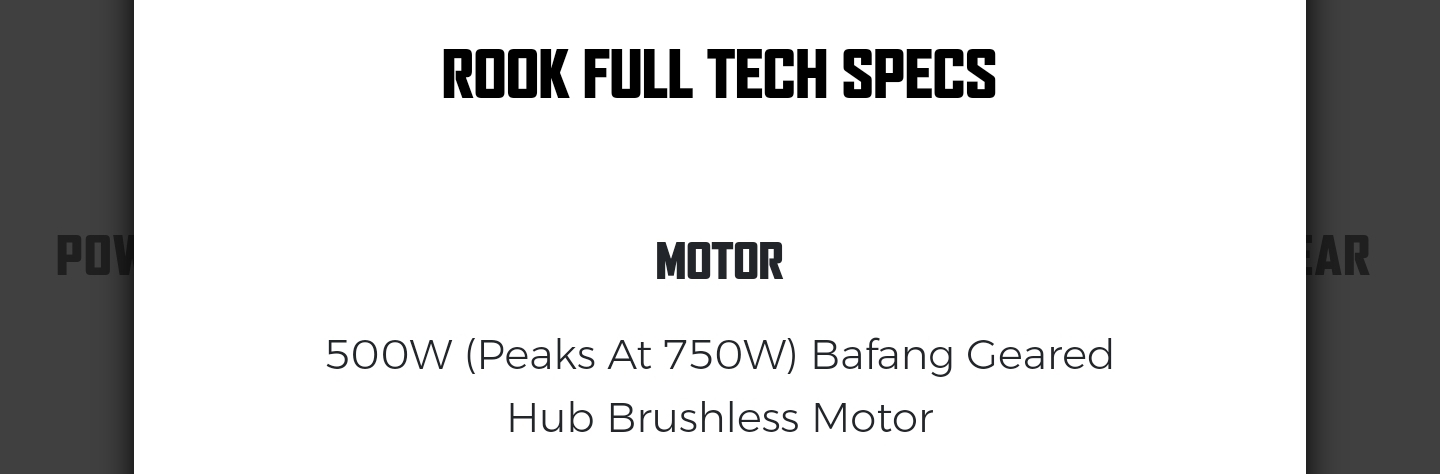
Ebike motor watt ratings are almost meaningless: the same hub motor is sold as 250W, 500W, and 1000W, with no standard way to rate motor power. Here's what really determines a motor's power, and why torque and heat matter more than the number on the label.

ebikes.ca
Yes, read that excellent article nearly a year ago but read it again. Quite a mess. Alas, still no G020 simulator.
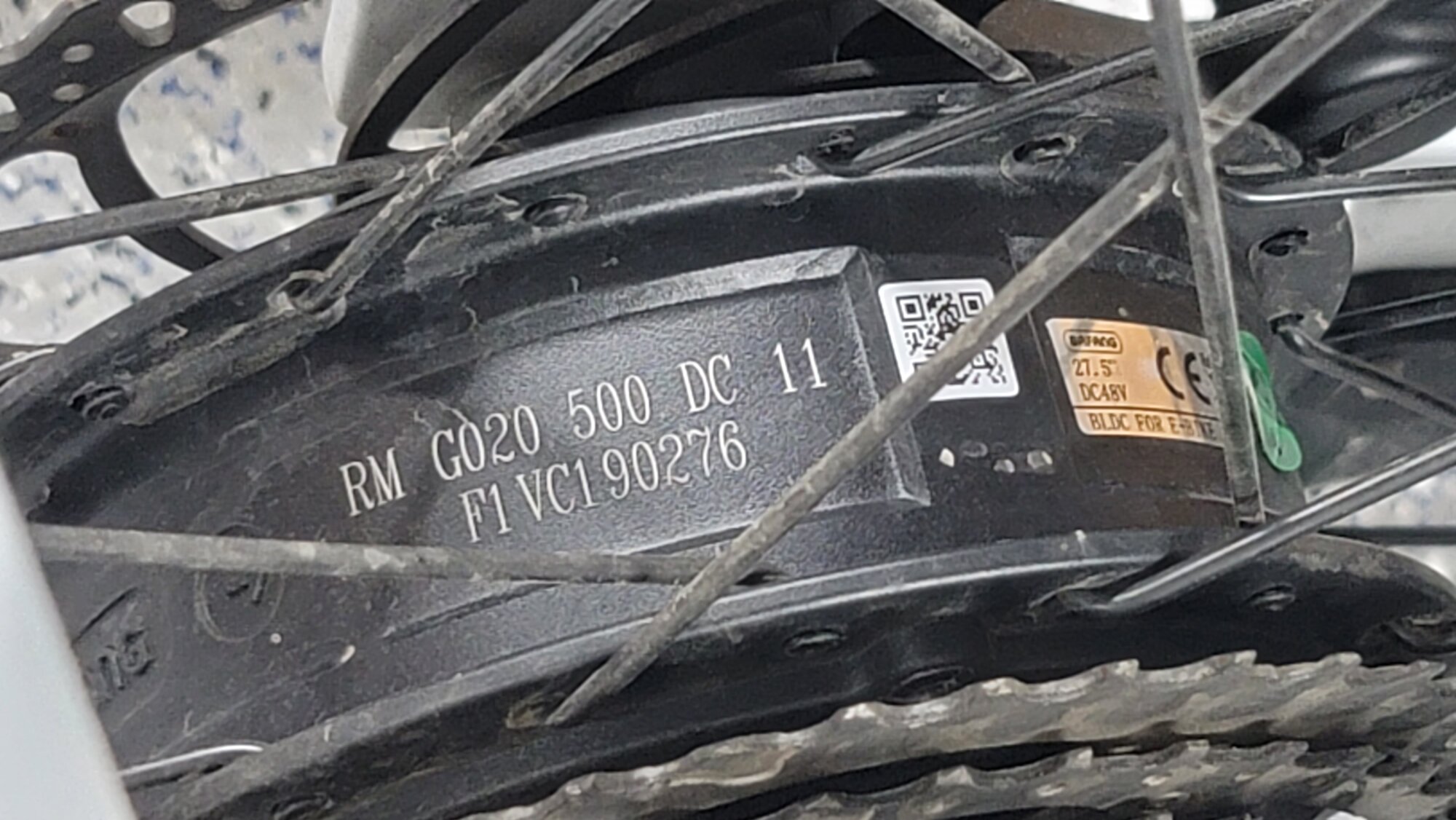
Found online photos of G020s with "250" stamped where mine has "500". Also found bare G020s for sale with 250W, 350W, and 500W nominal power specs. So to answer one of my own questions — yes, the G020 appears to come in more than one power rating.
Whatever those 250W, 350W, and 500W ratings mean vis-a-vis other manufacturers' motors or even other Bafang motors, they presumably refer to the same reference case (input voltage, controller, mechanical motor load) within the G020 line. Would love to know what that reference case is but probably never will.
Very familiar with the linear torque vs. speed and (inverted) parabolic power vs. speed curves found in brushed DC motors and with the power supply and load considerations involved. Once you allow for the distortions imposed by ebike controllers, the respective curves for the brushless DC motors in our ebikes are also roughly linear and parabolic.
Interestingly, per Wilson & Schmidt, 2020,
Bicycling Science, the power vs. speed (cadence) curve for an unassisted human rider is also close to a parabola — one with its peak at a cadence just a little higher than the preferred cadence riders usually report. Mathematically, a parabolic power vs. speed curve implies a linear torque vs. speed curve for any rotary motor. So the human torque vs. cadence curve could be roughly linear, too.