Wow you shared a plenty of facts that were unknown to me before, thank you. The story of the man that ran with his damaged bike is crazy! My respect to this man. Epic.A comment to anyone saying "gravel was ridden well before the sport was even invented": It was not a discipline. Anyone could ride a regular bicycle on surfaces that were available at those times. It was not making it a distinct sport or distinct bikes or specific ethos. The same: anyone could ride in the mountains but it was not MTB.
As I said, there are many styles or flavours. Unplanned rides for adventure? Fine! However, gravel cycling is the sports discipline most relying on GPS navigation. As a GCN presenter once said: 'The GPS navigation has totally changed the cycling. Now, you can ride for hundreds of miles never stopping, and you will always make the correct turn!' Fancy a group of several hundred or even a thousand of riders of both sex. They follow a 100+ or 160+ or 500+ or several thousand km course, and they are always on course (or are disqualified). It is often the SOLO category (where a rider is 100% self-supported and has to maintain a separation from any other rider except for the feeding zones). In the OPEN category, the riders can help each other but only can get any external help in the feeding zones.
Gravel cycling as a discipline means: "Ride far and ride fast. Be self-supported". The Ultra riders often use dynamos to keep their navigation and lighting (as well as the phone) working!
View attachment 217267
A girl on a 500+ kilometre course. The bike GPS computer is clearly visible.
View attachment 217268
Many gravel riders wear hydration packs (as well as carry extra water bottles). The GPS bike computer is even not optional!
Gravel cycling is very different from road cycling. In road cycling, it is a peloton. In gravel cycling, a group is only formed on leisure rides (coffee rides) or by several strong riders on the race. Drafting is very difficult in gravel cycling.
View attachment 217269
Lithuanian Express, or a team of three Lithuanian racers who once dominated the Staged Race format.
Unlike in road racing, there is a great sense of camaraderie in gravel cycling. Also, the "being self-supported" is the thing. Once, riding in cold, wind and pouring rain on a gravel race, I saw a man running with his bike in the mud! I, and several other riders stopped and had a chat with him in English. The Lithuanian hero had his drivetrain damaged beyond repair. He couldn't be helped so he was running with his bike in the dire conditions for 12 km to the finish line! And he had a podium in a 3-day Staged Race!
View attachment 217270
Anyone can present own youth pictures riding gravel on a regular bike. Anyone can flash some historical photos from the times asphalt wasn't even a thing. Nothing of that makes one a gravel cyclist. Participating in the sport does.
2026 UCI Gravel World Championships, Nannup, West Australia.
You are using an out of date browser. It may not display this or other websites correctly.
You should upgrade or use an alternative browser.
You should upgrade or use an alternative browser.
Why do you like gravel?
- Thread starter Jeremy McCreary
- Start date



PedalUma
Well-Known Member
- Region
- USA
- City
- Petaluma, CA
I enjoyed @stompandgo distinction between sport and competition. I like the intrinsic aspects of sports like sailing a small boat, cross country skiing in nature, fishing in a stream, or riding a bike. I am not at all into the extrinsic aspects of competitions. That is not any fun. Judges, rules, scores, referees, all of that stuff takes away my motivation.

Jeremy McCreary
Bought it anyway
- Region
- USA
- City
- Carlsbad, CA
A similar thread here...

The Sound of Gravel
Anyone else out there who just really enjoys the *sound* of gravel? Not sure why… there’s just something supremely satisfying about that soft continual *crunch* I feel and hear on a great gravel trail. I’m not typically someone who pays a lot of attention to such things, which is why I mention...forums.electricbikereview.com

The perfect companion to this thread! I'm going to add a link to it in the original post.

DaveMatthews
Dave's not here. Cheating since 2018
- Region
- Canada
Good idea!The perfect companion to this thread! I'm going to add a link to it in the original post.



jabberwocky
Well-Known Member
Another attraction is the equipment itself. A non-MTB that's reasonably competent on gravel is generally reasonably competent on pavement as well. The explorer in me just loves that flexibility and finds it well worth all the compromises involved.
Yeah, this is a good point. Modern gravel bikes are just good general purpose bikes. They tend to have more relaxed, comfortable geometry than road bikes, they have clearance for wider tires, usually have mounts for racks and extra bottles, etc. I do think some of the popularity of modern gravel bikes is just people looking for a good general purpose enthusiast bike.
PedalUma
Well-Known Member
- Region
- USA
- City
- Petaluma, CA
@jabberwocky is right on the mark. They are good general bikes. Some can even do bike packing that road and mountain bikes never could. Another thought on sport Vs. competition. It takes something that is a pure joy, needs no words, and turns it into something people then use war metaphors to describe with a jabbering narrator.

Stefan Mikes
Gravel e-biker
- Region
- Europe
- City
- Mazovia, PL
The drop bar allows for faster rides. The drivetrain is a crossover between Road and MTB. A gravel bike is usually lightweight, which allows carrying it over obstacles found on the trail. Interestingly, Pinarello makes its road e-bike with 2x chainring while it is 1x for the gravel version.Yeah, this is a good point. Modern gravel bikes are just good general purpose bikes. They tend to have more relaxed, comfortable geometry than road bikes, they have clearance for wider tires, usually have mounts for racks and extra bottles, etc. I do think some of the popularity of modern gravel bikes is just people looking for a good general purpose enthusiast bike.

stompandgo
Well-Known Member
- Region
- USA
I am, but I also freely admitted that I am new to riding offroad and that I am learning how to ride better on offroad surfaces.I have been a member of the gravel cycling community since 2022, have nine gravel races/rallies* behind my belt as well as numerous group rides, part of which I organised myself.
I'm ignorant in road rides/racing.
Are you a member of any gravel cycling community to present your expertise in the field?
-----------
*) A "a race" should be a sanctioned event, starting this year the formal name of the events I participate in became "a rally". The same thing.
One of big group rides. The ferry had to make two trips to carry all the riders.
Races can be sanctioned or unsanctioned. Sanctioning in the USA means that the event is recognized, listed, and insured by a regional or national governing body. Some of the sanctioning bodies in the USA are:
USA Cycling (UCI and IOC affiliated)
ORBA
NICA
NEYC
Unsanctioned races are what I call "pirate races". They are organized, but may or may not offer adequate insurance, may or may not have regulations, may or may not have adequate medical services, may or may not have adequate traffic control, and may or may not have a prize list.
Last edited:
stompandgo
Well-Known Member
- Region
- USA
Again, a sport, in particular, a cycling discipline like gravel, may have competitive (racing) and non-competitive (group rides, charity rides, fun rides, etc.) events. The primary differentiators between the two, recognized by sanctioning bodies, and by most sporting event insurers, is that if the event is timed, and publishes results, it is a competitive event. The motive of the participant is irrelevant.That was harsh Jeremy. "Gravel cycling" is a sports discipline, like it or not. It was not there before.
The Canadian guy does not participate in the sport. He, however, rides a gravel bike. What a surprise.
stompandgo
Well-Known Member
- Region
- USA
No you didn't. Go back and read your words again.P.S. All I said about the road rides was the riders were riding in the group (peloton) for the aero advantage. Which is not the norm in gravel cycling, where a group is only formed on coffee rides or by strong riders on a race.

Gionnirocket
Well-Known Unidentified Member
- Region
- USA
- City
- Y. O.
I use to play that game as a child.
May I?
Yes you may
May I?
Yes you may
Stefan Mikes
Gravel e-biker
- Region
- Europe
- City
- Mazovia, PL
Whatever you name a road cycling group, it is a group/peloton. In gravel cycling, it is how I wrote. It might be different in the U.S. with its wide gravel roads but certainly not in my country, where premium gravel is a rarity.Gravel cycling is very different from road cycling. In road cycling, it is a peloton. In gravel cycling, a group is only formed on leisure rides (coffee rides) or by several strong riders on the race. Drafting is very difficult in gravel cycling.
My bad. I am ignorant in road cycling matters.Unlike in road racing, there is a great sense of camaraderie in gravel cycling.
@stompandgo: So what gravel cycling club do you represent? How many miles have you ridden with them this year? What gravel events did you start in this year? I'm asking it to assess your competence in gravel cycling.
Stefan Mikes
Gravel e-biker
- Region
- Europe
- City
- Mazovia, PL
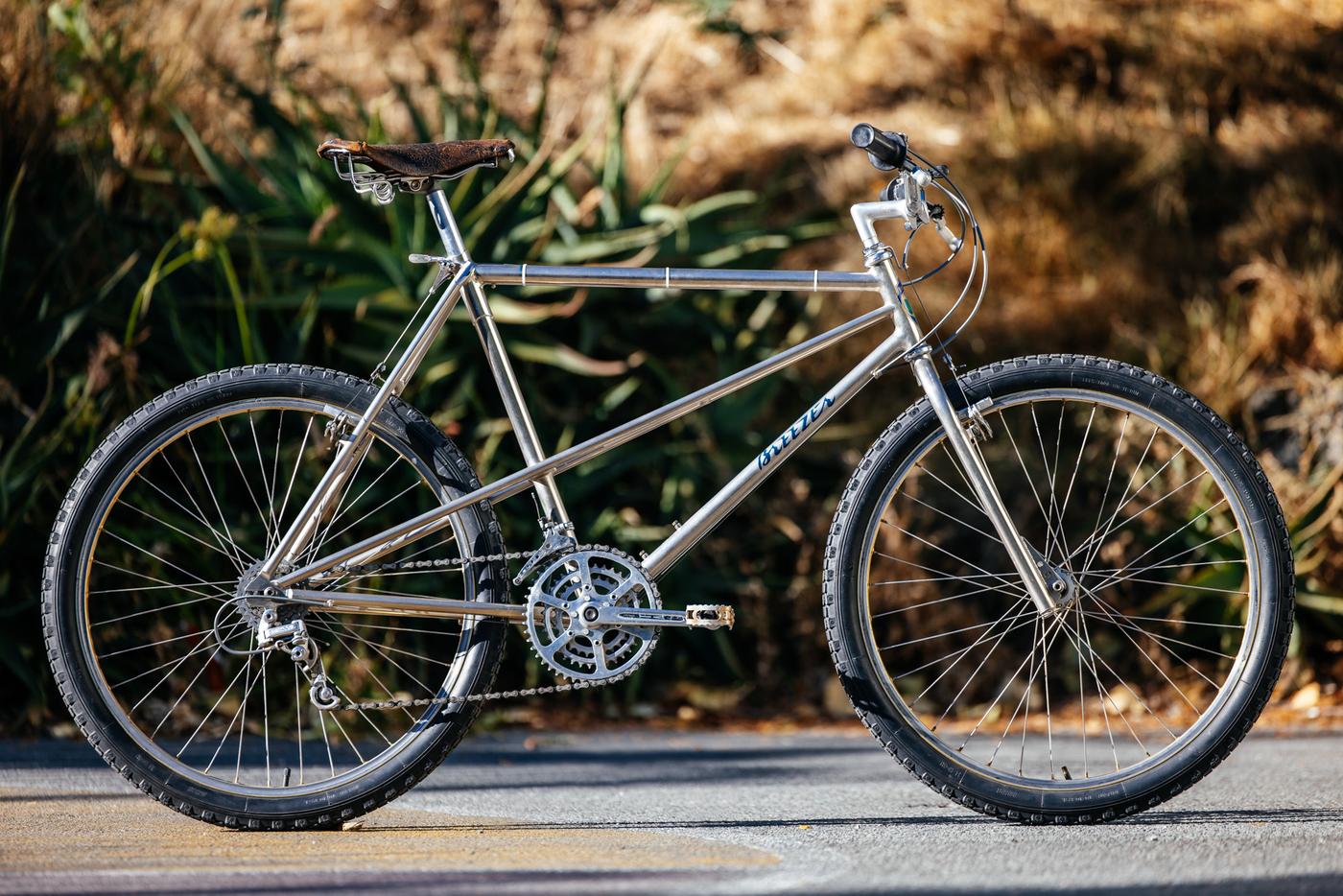
Why don't you ride it to this day?Hmmm I tended to have bikes like this one (1985):
Gionnirocket
Well-Known Unidentified Member
- Region
- USA
- City
- Y. O.
Yes Stompandgo.... I need to see your papers!
PedalUma
Well-Known Member
- Region
- USA
- City
- Petaluma, CA
Multi-surface bikes were used by the Japanese to take the Malay Peninsula. Allied forces were stuck mostly to main roads and heavy armor, the bikes out flanked them. When the bikes lost their tires they made such a racket that it sounded like a bunch of light tanks approaching and everyone ran. The Marin Museum of Bicycling had a lecture on the history and origins of the Gravel bike that is how I came across the Buffalo Solders and the Japanese Infantry on bicycles. The expert said that is in the DNA of modern gravel bikes.
 mmbhof.org
HOME - Marin Museum of Bicycling and Mountain Bike Hall of Fame
America’s most comprehensive collection of Road and Mountain Bicycle history
mmbhof.org
stompandgo
Well-Known Member
- Region
- USA
Yes Stompandgo.... I need to see your papers!
PedalUma
Well-Known Member
- Region
- USA
- City
- Petaluma, CA
Do you have 9/16ths threads with bearings attached on the insides of your shoes? Otherwise, I do not see how the Quint bike can go without any pedals! For those who don't know 'Quint' is like Jaws, but the real deal. He is about 600 pounds, ten-feet long, and likes to hang out inside the Cape. One bike historian expert said that all the outdoor bikes in the late 1890's were gravel bikes. The original 1982 Stumpjumper looks like a flat bar gravel bike, even the tires. It was before wide range one-by's and before discs. I remember going to the Vineyard and at our regular hotel there were a bunch of weirdos one year from California making a movie about a shark. The song Rock the Boat, was playing on the radio.
Stefan Mikes
Gravel e-biker
- Region
- Europe
- City
- Mazovia, PL
As one Artur Schopenhauer wrote a long time ago in his Eristic, a personal attack is admitting the disputant is out of arguments.
So please tell me Stomp what your competence in the field of gravel cycling is. Well, if you say you are Captain Quint then I have nothing to say more, either.
Besides, I congratulate the United States of America a wise choice in the polls of yesterday.
So please tell me Stomp what your competence in the field of gravel cycling is. Well, if you say you are Captain Quint then I have nothing to say more, either.
Besides, I congratulate the United States of America a wise choice in the polls of yesterday.
stompandgo
Well-Known Member
- Region
- USA
Don't be silly, they are Speedplay Zero's.Do you have 9/16ths threads with bearings attached on the insides of your shoes? Otherwise, I do not see how the Quint bike can go without any pedals!
stompandgo
Well-Known Member
- Region
- USA
Stefan, it was a joke. If you remember the movie, Quint gets eaten alive by the shark, with blood spewing out of his mouth. Not exactly the image of a winner. Anyway, I did not "attack" you personally. I called you out on statements that you made that were not true that you admittedly said that you have no experience with. I support you in believing whatever you want to believe about road cycling. If my extensive experience is different, or you make statements that are not based on fact, then I will speak up. You do exactly the same thing here. So let's get back to discussing gravel cycling without bashing road cycling in the process.
Similar threads


- Replies
- 9
- Views
- 14K

- Replies
- 30
- Views
- 19K


- Replies
- 45
- Views
- 33K