Trek FX+ 2 or Trek Marlin+ 8 2nd gen?

As a woman, I’d rather not have a bike that is half my body weight.

1793371860553.png

|
1793371910051.png

Some petite women such as my riding mate Anna do not mind a heavy but a powerful e-bike with a big battery :)

The question you should ask yourself @modern is whether you prefer carrying to rather riding your e-bike!

A small battery won't take you far. A hub-drive motor is the most hopeless climber. The low weight of the e-bike won't change it.
 
Last edited:
@stompandgo that’s true. Although, I dread the thought of having to research more. I’ve been searching for months and cannot seem to find a bike that fits all of my wants (mid-drive, 50 lbs or less, user removable battery, something not crazy expensive).

Totally understand the research fatigue, and very much agree that local service is essential. But you can narrow the field and educate yourself at the same time by visiting other local shops with quality brands.

Importantly, testing a variety of bikes close to your needs is the best defense against wanting a different bike a year later.

I like how Trek offers Bosch motors, but the bikes are typically too hefty or full suspension emtbs. So I thought the Marlin would be perfect, but I cannot detach the battery myself.

A detachable battery really limits your options. How important is that to you and why?

Am open to any suggestions. I would prefer a legacy brand like Trek or Specialized over a DTC company.

If you're willing to consider hub-drives, Velotric and Aventon are quality brands worth looking at. Both have large national dealer networks.

1793373390697.jpeg

I ride the yellow lightweight low-power Specialized mid-drive above but am quite impressed with my wife's 50 48 lb, 750W, 65 Nm Velotric Breeze 1 hub-drive (the blue one). That's 50 48 lb with battery.

Removable 48V, 627 Wh UL-certified battery. Both torque- and cadence-sensing pedal assist selectable on the fly. Gobs of power with very natural power delivery in torque-sensing mode. Very responsive. Class 3.

Yes, it's a cruiser, but it's quite capable on all the surfaces you want to ride. We live in a very hilly area, and it has yet to bog down on a climb. In fact, she can leave me in the dust on any hill she wants.

I'd say well worth a test given your stated needs.
 
Last edited:
Totally understand the research fatigue, and very much agree that local service is essential. But you can narrow the field and educate yourself at the same time by visiting other local shops with quality brands.

Importantly, testing a variety of bikes close to your needs is the best defense against wanting a different bike a year later.


A detachable battery really limits your options. How important is that to you and why?


If you're willing to consider hub-drives, Velotric and Aventon are quality brands worth looking at. Both have large national dealer networks.

View attachment 217129
I ride the yellow lightweight low-power Specialized mid-drive above but am quite impressed with my wife's 50 lb, 750W, 65ish Nm Velotric Breeze 1 (the blue one).

Removable 48V, 627 Wh UL-certified battery. Both torque- and cadence-sensing pedal assist selectable on the fly. Gobs of power with very natural power delivery in torque-sensing mode. Very responsive. Class 3.

Yes, it's a cruiser, but it's quite capable on all the surfaces you want to ride. We live in a very hilly area, and it has yet to bog down on a climb. In fact, she can leave me in the dust on any hill she wants.

I'd say well worth a test given your stated needs.
Your wife's bike is very similar to the super popular Pace 500. It is not for me but it is probably the #1 bike in the US. The Velotrics are feature rich and at a nice price point for most people.
 
Your wife's bike is very similar to the super popular Pace 500. It is not for me but it is probably the #1 bike in the US. The Velotrics are feature rich and at a nice price point for most people.

We tested the Pace.3, and both of us liked the Breeze a lot better — mainly on weight, power, and handling.

20261016_112735.jpg

Recently rented Aventon's lightweight 350W Soltera hub-drive (yellow above). I enjoyed it, but it might be underpowered for the 0P — especially on hills.
 
Last edited:
We tested the Pace.3, and both of us liked the Breeze a lot better. — mainly on weight, power, and handling.

View attachment 217131
Recently rented Aventon's lightweight 350W Soltera hub-drive (yellow above). I enjoyed it, but it might be underpowered for the 0P — especially on hills.
The Tempo is 39 pounds and has a pedal assist range on the flats of 60 miles. It is 350W and has a removable throttle so it can be Class 1, 2, or 3. It has nation wide support with 1,600 dealers. Velotric is very responsive with service.
1793383923602.png
 
@Stefan Mikes the link that I shared is for the newest Marlin model with 540 Wh. It’s not a huge difference, but wanted to clarify. I know other bikes have bigger batteries, but it’s at the cost of extra weight. I didn’t have the best experience with the Verve+ because of this issue, along with the upright posture. As a woman, I’d rather not have a bike that is half my body weight. One of the biggest complaints that I see on women’s cycling forums are that most e-bikes are too heavy. Some enjoy heavier bikes and love a good fat tire, but I am not one of them. I’m willing to sacrifice a bit of battery to be able to get a lighter weight bike.
Smaller batteries are just fine as long as you understand what it is. I repurposed my 480wh battery from my diy build to use with my new bike that came with a 1000wh. Since most of my daily exercise rides are about 25 miles it's more than adequate and I only use about 50% of its capacity. Keep in mind this is with a heavy (+80lb fs bike ( half my body weight) and a 1000w mid drive in a pretty hilly area... about 450ft of gain on that 25 mile ride with a mix of paved and off road. I've easily gone as far as 35 miles with the battery in part because the terrain levels out the further I get from home.
So if you understand how far you intend to ride and the demands on the battrry in a single outing.. they can be more than adequate.
 
It all depends on how you ride it. A 36V 10Ah on a 90Nm mid-drive can go 41 miles with 2,000 feet of elevation gains. A bigger battery is not always better.

1793459612218.png
 
Totally understand the research fatigue, and very much agree that local service is essential. But you can narrow the field and educate yourself at the same time by visiting other local shops with quality brands.

Importantly, testing a variety of bikes close to your needs is the best defense against wanting a different bike a year later.


A detachable battery really limits your options. How important is that to you and why?


If you're willing to consider hub-drives, Velotric and Aventon are quality brands worth looking at. Both have large national dealer networks.

View attachment 217129
I ride the yellow lightweight low-power Specialized mid-drive above but am quite impressed with my wife's 50 48 lb, 750W, 65 Nm Velotric Breeze 1 hub-drive (the blue one). That's 50 48 lb with battery.

Removable 48V, 627 Wh UL-certified battery. Both torque- and cadence-sensing pedal assist selectable on the fly. Gobs of power with very natural power delivery in torque-sensing mode. Very responsive. Class 3.

Yes, it's a cruiser, but it's quite capable on all the surfaces you want to ride. We live in a very hilly area, and it has yet to bog down on a climb. In fact, she can leave me in the dust on any hill she wants.

I'd say well worth a test given your stated needs.

I live in an area where the temp regularly gets above 95-100 degrees for months at a time in the summer. My partner keeps his bike in the garage, but his battery stays in the house. Ideally, I’d like to do the same since we live in a small 1 bedroom condo and space is already limited.

Good to know about the Velotric. Although, I’m a bit confused about whether hub motors can handle hills or not because I keep getting different opinions.
In part... there are different size hub motors. Then whether or not it uses cadence sensor, torque or a combination of both. Cadence usually allows the motor to climb more easily with less user effort but at the expense of a natural feel.
Personally... Mid drive/torque sensor for the most natural biking experience and climbing abilities.
 
Last edited:
@Gionnirocket thank you, that’s helpful information. I want a natural riding experience so I’ll stick with mid drive or hub torque sensor.

To answer your comment about anticipated range, I expect to ride up to 15-20 miles at a time. I’m a cancer survivor with peripheral neuropathy in my hands and feet and have problems with increased numbness after a couple hours on a bike. I’m hopeful that I can squeeze in longer rides on occasion.
Ok... Just understand a hub/torque is not a good climber. The Velotric allows you to switch between the two sensors on the fly so that can help you in keeping cost down with the hub motor.
Given your condition... Treat yourself to a nice bike 😉
 
So, random questions. I’ve been browsing online (thanks to some of your comments) and see bikes such as the Specialized Turbo Vado 2 4.0 and Aventon Level 4 ADV that are both high power/larger battery but 58-61 lbs. In comparison, I see the Velotric Tempo and Aventon Solterra 2.5 with much smaller batteries/less powerful motors but 39-48 lbs. Will they all offer a very agile natural bike riding experience or do the heavier ones affect steering?

I didn’t feel like the steering was as responsive on the Verve+ 3 and felt like I was going to tip over at times. Would this be due to the more upright position, the heavier weight, or both? This is the main thing I’m trying to avoid, but now am unsure of the cause.

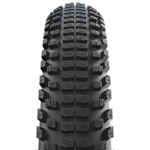
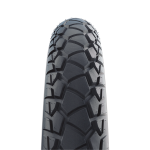
Also, would changing tires to something less knobby make the Marlin+ easier to ride on pavement? I admit that I like the idea of wider tires, but not as extreme as fat tires. I’ve got some bone density issues so added stability would be a huge plus for me.
 
I think it was the upright position...
Weight can feel more stable and sure footed but can also feel like it wants to plow straight and not as agile in tight turns.
That said my 80lb'r is agile enough and you learned to steer a little differently and minimize the plow straight ahead affect. I ride aggressively and love to lean in turns.
Street oriented tires make a huge difference. I love my Schwalbe Al Grounder tires. At 2.6...there in the middle of width and just perfect for my needs. Very efficient/quiet on paved roads with some off road abilities.
 
I live in an area where the temp regularly gets above 95-100 degrees for months at a time in the summer. My partner keeps his bike in the garage, but his battery stays in the house. Ideally, I’d like to do the same since we live in a small 1 bedroom condo and space is already limited.

That would be my plan in your environment, too. Detachable battery it is, then.

Good to know about the Velotric. Although, I’m a bit confused about whether hub motors can handle hills or not because I keep getting different opinions.

There are hub-drives and hub-drives, and not all hills are the same. Comes down to what your hills are like.

Let's talk real-life experience, not online opinions — many of which are knee-jerk or parroted or just plain irrational when it comes to the mid- vs. hub-drive debate.

Our hills are commonly up to 8% but usually under a mile in length. My wife's 48 lb, 750W Velotric Breeze hub-drive handles all of these with ease. She and the Breeze can out-climb me and my 36 lb, 250W Specialized Vado SL on any of them, and I'm the stronger rider by a good margin.

Ditto on our many steep 1-block ramps at 12-16%. But my old 70 lb, 500W Surface 604 hub-drive struggles on some of these ramps.

How would the Breeze do on a 5 mile climb at 6%? Can't say, but pretty sure the SL would be fine.

The climb up Double Peak ends in ½ mile of 20%. The SL is fine on this climb, but my neighbor's 65 lb, 500W Aventon hub-drive went into thermal shut-down near the top and had to cool before he could finish. The Surface 604 made it but was fading fast at the top. I bet the Breeze would make it, too — probably with less fade.

How do your hills compare?
 
Last edited:
So, random questions. I’ve been browsing online (thanks to some of your comments) and see bikes such as the Specialized Turbo Vado 2 4.0 and Aventon Level 4 ADV that are both high power/larger battery but 58-61 lbs. In comparison, I see the Velotric Tempo and Aventon Solterra 2.5 with much smaller batteries/less powerful motors but 39-48 lbs. Will they all offer a very agile natural bike riding experience or do the heavier ones affect steering?

All good questions. Given an ebike with adequate power for your hills, the most compelling argument for lighter weight is exactly that — better handling and agility in the saddle, and easier maneuvering and lifting off the bike.

These are not small things and are worth a good bit of money to me. The difference between my 36 and 70 lb bikes on these fronts is night and day.

I didn’t feel like the steering was as responsive on the Verve+ 3 and felt like I was going to tip over at times. Would this be due to the more upright position, the heavier weight, or both? This is the main thing I’m trying to avoid, but now am unsure of the cause.

Now you're into frame geometry, a very complicated subject. In the end, there's just no substitute for testing when it comes to ride feel.

My wife went from a twitchy 70 lb commuter that gave her the willies to a very stable 48 lb cruiser that she feels totally secure on. They were equally upright. The difference was a combo of frame geometry and weight.

Also, would changing tires to something less knobby make the Marlin+ easier to ride on pavement? I admit that I like the idea of wider tires, but not as extreme as fat tires. I’ve got some bone density issues so added stability would be a huge plus for me.

Yes, knobbier is generally slower. But short of the fat-tire extreme, your motor will absorb differences in tire rolling resistance without your noticing it.

True, slower tires can reduce battery range, but that's not going to be an issue on the 15-2O mile rides you have in mind.

Tire width is another very complicated topic. If you're not riding on loose sand or snow and are concerned about stability and handling, the 2.0-2.5 inch tires that come on most commuters and cruisers will be fine for your needs.

I'd urge you to spend more time testing and less time reading and typing at this point in your purchase.
 
Last edited:
Also, would changing tires to something less knobby make the Marlin+ easier to ride on pavement? I admit that I like the idea of wider tires, but not as extreme as fat tires. I’ve got some bone density issues so added stability would be a huge plus for me.
My Giant came with 2.4 Maxxis Rekon tires. They are quite aggressive off-road type tread. I wore them out on very mixed terrain and went for a less aggressive/more pavement friendly tread. The tires I went with are slightly smaller at 2.3" and the center tread (Continental Ruban) is much nicer and quieter on pavement whilst still very capable off-road. Very happy with the choice. Tire pressure plays a role as well.
 
My Giant came with 2.4 Maxxis Rekon tires. They are quite aggressive off-road type tread. I wore them out on very mixed terrain and went for a less aggressive/more pavement friendly tread. The tires I went with are slightly smaller at 2.3" and the center tread (Continental Ruban) is much nicer and quieter on pavement whilst still very capable off-road. Very happy with the choice. Tire pressure plays a role as well.

Totally agree, a hybrid tire with some side lugs around a faster center tread is often just the ticket for mixed pavement and light offroad use.
Screenshot_20220915-171245_Chrome.jpg

Worked beautifully on my mixed-surface commuter. Had its stock city tires replaced with these 2.35" hybrids before even taking delivery.

Which brings up another important bike shopping point: You can always change tires at fairly reasonable cost. Don't let the stock tires dissuade you from a bike that's otherwise right for your needs.
 
My Giant came with 2.4 Maxxis Rekon tires. They are quite aggressive off-road type tread. I wore them out on very mixed terrain and went for a less aggressive/more pavement friendly tread. The tires I went with are slightly smaller at 2.3" and the center tread (Continental Ruban) is much nicer and quieter on pavement whilst still very capable off-road. Very happy with the choice. Tire pressure plays a role as well.
As with all aspects of any bike... Personal use is a big factor. I ride aggressively on pavement and the Schwalbe equivalent, the Johnny Watts I found to be absolutely atrocious on pavement. Often breaking traction in tight turns and braking... and with higher rolling resistance and micro vibrations that I didn't really notice until I went with a smoother center. That said I've always wanted to give the Ruben's a test run as I feel Continental has a nice product and maybe different though similar in appearance. So rolling resistance isn't the only reason to avoid knobs on pavement.. even if a motor somewhat nullifies that factor.


hs618_schwalbe_johnny-watts-365_profil.png_01990b6ce3e8726bbe0641585071b554.png
Johnny Watt All Terrain

hs611_schwalbe_al-grounder_profil.png_01990b6958b7731b8a2a9629ee9ba29e_1920x1920.png
All Grounder All Terrain

Tabelle_Profil_1_2022_Seite7.jpg


As for the hub discussion... All else being equal a 500w mid drive will out climb a 500w hub. Period.
This in part due to the fact that the mid drive takes advantage of the gears... Though this may sound like internet parroting 🙃
And tho sounding irrational, a mid drive also offers a better center of gravity.
Yes there are many acceptable, capable hub drive bikes and they have a meaningful purpose. But my internet opinion is, if you can afford a mid drive, your less likely to be disappointed.
Seems there's a lot of expertise coming from past bad decisions in both motor and riding position choices. Or is it the know it all certificate granted many Specialized owners?

Sorry @modern... I did say in my first post I was a b_breaker. I just don't veil it like others attempt to.
As also mentioned in my initial post... I think you'd be well served by renting a few different bikes.
 
Last edited:
As for the hub discussion... All else being equal a 500w mid drive will out climb a 500w hub. Period.
This in part due to the fact that the mid drive takes advantage of the gears... Though this may sound like internet parroting 🙃
And tho sounding irrational, a mid drive also offers a better center of gravity.
Yes there are many acceptable, capable hub drive bikes and they have a meaningful purpose. But my internet opinion is, if you can afford a mid drive, your less likely to be disappointed.

Totally agree with that last sentence. I prefer my mid-drive for many reasons, but have come to see from personal experience that climbing need not be a deal-killer for hub-drives — even in my hilly terrain. Just don't count on getting up a half-mile of 20% without stopping to let the motor cool.

Disagree about the role of gearing in mid-drives, though. If you look at the actual gear ratios involved, you'll see that most bike gears are overdrives that actually put the mid-drive motor at a mechanical disadvantage over the rear wheel.

On most non-MTBs, all gears are overdrives, ebikes included. And even on MTBs, most of the gears are overdrives.

What the gearing on a mid-drive does is to let you keep your cadence up as you slow on climbs. Since motor shaft speed in a mid-drive is tied to cadence, not ground speed, this keeps the motor in its effiency sweet spot, thereby getting maximum mechanical power and minimum heat from every watt of electrical power burned.

In contrast, hub-drive motor efficiency is tied to ground speed via wheel speed, not to cadence. As you bog down on a climb, the hub motor gets less and less efficient, meaning that each electrical watt goes more and more to motor heating and less and less to propelling you up the hill.

This dynamic is the hub-drive's Achilles heel on climbs, and no amount of downshifting can change it. Downshifting a hub-drive only helps you finish the climb on your own steam as the motor's mechanical power output fades.

But if your hills aren't too long or steep, that Achilles heel may never come up in routine riding. That's certainly the case with my wife's 750W hub-drive, and our terrain's a good bit hillier than most places.
 
Last edited:
Back