You are using an out of date browser. It may not display this or other websites correctly.
You should upgrade or use an alternative browser.
You should upgrade or use an alternative browser.
User Selectable E-Bike Class.
- Thread starter Jim1348
- Start date



rob feature
Well-Known Member
- Region
- USA
- City
- Greenwood Village, Colorado
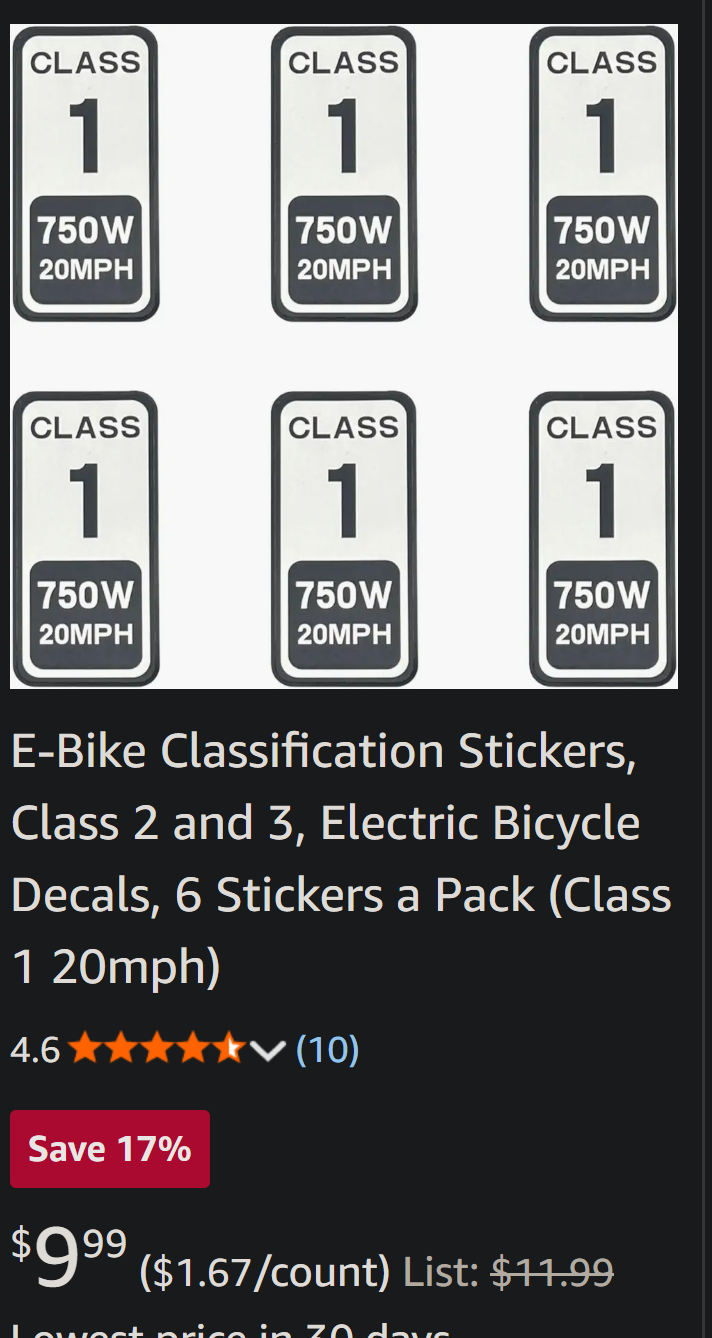
Another option 

6zfshdb
Well-Known Member
- Region
- USA
- City
- Northeast Pennsylvania
Could be an issue since new Federal E-bike legislation prohibits bikes that can easily be modified to change class.
See @J.R. 's post:

 forums.electricbikereview.com
See @J.R. 's post:
New Federal E-Bike Legislation March 2026
The Safe SPEEDS Act — Federal E‑Bike Legislation The Safe SPEEDS Act (Safe Standards for Personal E‑Bike and E‑Moto Device Specifications Act) is a bipartisan bill introduced in March 2026 by Reps. Jared Huffman (D‑CA), Dave Min (D‑CA), Mike Lawler (R‑NY), and Brian Fitzpatrick (R‑PA) to address...
forums.electricbikereview.com
Biplaneguy
Active Member
- Region
- USA
My Radster Trail has that feature.



Jeremy McCreary
Bought it anyway
- Region
- USA
- City
- Carlsbad, CA
Under existing California law, the only frame sticker that counts is the manufacturer's.
My 500W Canadian commuter with thumb throttle was configured and sold as a Class 2 in 2022. No manufacturer's class sticker.
And none would have made sense, as you can easily change its max pedaled assisted speed to up to 36 mph right on the display with a readily available passcode.
The throttle's 20 mph max can't be changed, as required by Class 2 law. But that 36 mph takes the bike totally outside the class system. Hence, not really a legal ebike.
Ebikes with similar capabilities were already widely available in 2022. As were ebikes sold and even officially stickered as "Class 3" but equipped with throttles. Legally, Class 3 is pedal assist only. Hand throttles are allowed only in Class 2.
When I asked my dealer what would would happen if I were caught riding in a place with Class 1 access only, he said (a) that there are few places like that here in coastal SoCal, and (b) that if I ride responsibly, the odds of getting stopped anywhere are slim. But he had no idea what would happen if I did get stopped.
So here we have both dealers and manufacturers either (a) freely selling clearly non-compliant bikes as legal ebikes to unwitting customers, or (b) telling witting customers that they're unlikely to face consequences. And that behavior widely extended to e-motos far removed from any definition of a legal ebike.
I was new to ebikes at the time (2022) and didn't understand the implications. Now I see that manufacturers and dealers were at the vanguard of the "ebike laws don't matter" mentality so prevalent today.
And now we're facing wildly over-regulating backlashes from alarmed citizens and lawmakers all over the country. IMO, totally preventable if the "ebike" industry had just stayed within the law to begin with. The auto industry generally does, and they still manage to make money.
This is why we can't have nice things.
Last edited:
Could be an issue since new Federal E-bike legislation prohibits bikes that can easily be modified to change class.
See @J.R. 's post:
New Federal E-Bike Legislation March 2026
The Safe SPEEDS Act — Federal E‑Bike Legislation The Safe SPEEDS Act (Safe Standards for Personal E‑Bike and E‑Moto Device Specifications Act) is a bipartisan bill introduced in March 2026 by Reps. Jared Huffman (D‑CA), Dave Min (D‑CA), Mike Lawler (R‑NY), and Brian Fitzpatrick (R‑PA) to address...
The federal Safe SPEEDS Act (H.R. 7839) has not passed as of early May 2026.
Under existing California law, the only frame sticker that counts is the manufacturer's...
@Jeremy McCreary, can you please post a link to that California law?
Jeremy McCreary
Bought it anyway
- Region
- USA
- City
- Carlsbad, CA
I know I saw it in a major CA ebike bill that passed in the last year or so — probably the one that went into effect in January, 2026. Look there if you need a citation.@Jeremy McCreary, can you please post a link to that California law?
Chargeride
Well-Known Member
Switchable power modes are strictly prohibited in the EU, you cant have an offroad-onroad changeover.
People often comment that you can buy a 200mph car, firstly yes, but the licence and registration plate contains your consequence, and secondly..you dont think theyre coming for that.
Speed restricted cars are absolutely our future.
They want us using robotaxis..own nothing be happy, every ride logged, no millions of cars sat in car parks and driveways.
Tony Blair has just called for abolishing pensions, you will be allocated movement rights.
They are getting radical and its hard for me to disagree at times.
I have accepted the 16mph limit on my ebike, I have adjusted my desire, found pleasure within constraints.
In fact its the only place it survives
People often comment that you can buy a 200mph car, firstly yes, but the licence and registration plate contains your consequence, and secondly..you dont think theyre coming for that.
Speed restricted cars are absolutely our future.
They want us using robotaxis..own nothing be happy, every ride logged, no millions of cars sat in car parks and driveways.
Tony Blair has just called for abolishing pensions, you will be allocated movement rights.
They are getting radical and its hard for me to disagree at times.
I have accepted the 16mph limit on my ebike, I have adjusted my desire, found pleasure within constraints.
In fact its the only place it survives

Underdog
Active Member
All the new imposing regulations makes the switchable class bikes more desirable to me anyway. Get them while you still can before some moron in government changes the rules making them unavailable. As long as your ride and act respectable with it, like and adult should, there should be no one the wiser. Two months ago I picked up a new bike just for this very reason, class 1,2,3, and off road mode switchable, capable of 28 mph with both PAS and throttle and NO over the air updates to reduce or change my setting or top speed, this one is a keeper for sure, and I enjoy riding it like a responsible adult.

stompandgo
Well-Known Member
- Region
- USA
Driver facing cameras are supposed to become law pretty soon in the US. Insurance companies paid off the politicians for that one. There is an uprising to repeal it. We shall see.Switchable power modes are strictly prohibited in the EU, you cant have an offroad-onroad changeover.
People often comment that you can buy a 200mph car, firstly yes, but the licence and registration plate contains your consequence, and secondly..you dont think theyre coming for that.
Speed restricted cars are absolutely our future.
They want us using robotaxis..own nothing be happy, every ride logged, no millions of cars sat in car parks and driveways.
Tony Blair has just called for abolishing pensions, you will be allocated movement rights.
They are getting radical and its hard for me to disagree at times.
I have accepted the 16mph limit on my ebike, I have adjusted my desire, found pleasure within constraints.
In fact its the only place it survives

Stefan Mikes
Gravel e-biker
- Region
- Europe
- City
- Mazovia, PL
@Jeremy McCreary, can you please post a link to that California law?
A class is a class to which an "electric bicycle" OR "motorized bicycle/moped" was built, so no "selectable class" is allowed.
6zfshdb
Well-Known Member
- Region
- USA
- City
- Northeast Pennsylvania
I'll bet this guy was glad he had a driver facing camera. Made it easier to explain to his boss that the truck was hit by a plane.Driver facing cameras are supposed to become law pretty soon in the US. Insurance companies paid off the politicians for that one. There is an uprising to repeal it. We shall see.
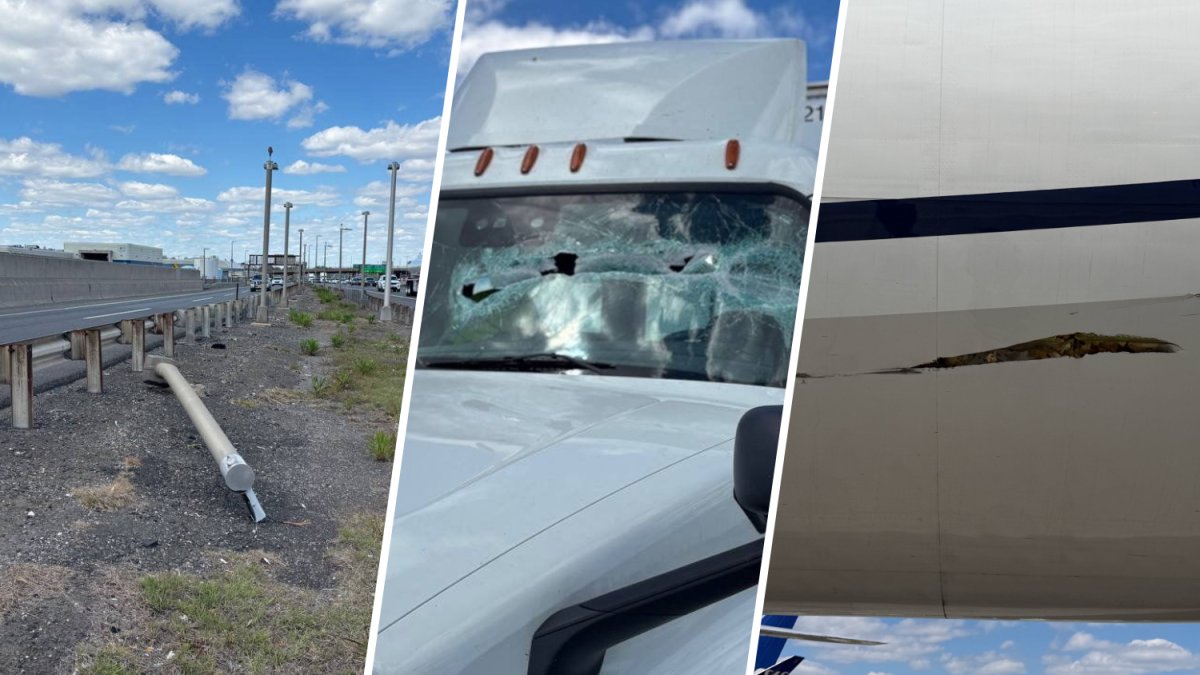
Shocking video shows United jet hit truck on NJ Turnpike in wild Newark landing
The plane also hit a light pole on its approach to Newark Airport Sunday.
 www.nbcnewyork.com

RunForTheHills
Well-Known Member
- Region
- USA
I am not a big fan of ebike classes, but I can live with it if the alternative is that all ebikes are treated like motorcycles or all ebikes are restricted to 15mph like Europe. One of the biggest problems with ebike laws that we have today is lack of enforcement. The one percent of scofflaw ebike (or illegal emoto) owners giving ebikes a bad reputation. User selectable classes makes ebike laws almost impossible to enforce, and IMHO, are not in the ebike communities best interest.
Jeremy McCreary
Bought it anyway
- Region
- USA
- City
- Carlsbad, CA
Absolutely. The "let ebike riders do whatever they want" experiment has clearly failed and now threatens legal ebike access to bike infrastructure everywhere.User selectable classes makes ebike laws almost impossible to enforce, and IMHO, are not in the ebike communities best interest.
And the old "it's the riders, not the bikes" argument is just too simplistic. Let's face it, few of the yahoos who give legal ebikes a bad name would be able to behave nearly as badly without powerful assist, especially at high speeds.
I'm convinced that consistent and conspicuous enforcement of existing laws would go a long way toward saving our future access to bike infrastructure. Let's not make it harder than it is already is.
6zfshdb
Well-Known Member
- Region
- USA
- City
- Northeast Pennsylvania
I agree.Absolutely. The "let ebike riders do whatever they want" experiment has clearly failed and now threatens legal ebike access to bike infrastructure everywhere.
And the old "it's the riders, not the bikes" argument is just too simplistic. Let's face it, few of the yahoos who give legal ebikes a bad name would be able to behave nearly as badly without powerful assist, especially at high speeds.
I'm convinced that consistent and conspicuous enforcement of existing laws would go a long way toward saving our future access to bike infrastructure. Let's not make it harder than it is already is.
The makers of these high power bikes claim they are to be used on private property or in places where they are permitted. Tough to legislate against that. In the unlikely event legislation were passed against manufacture and import of these bikes, there will always be a black market, and those who produce products to "power up" legal bikes.
Anti e-bike laws and signage are the easy way, but without strict enforcement, these outlaw juveniles will continue to do what they want and simply ignore them.

BlackHand
Well-Known Member
- Region
- USA
- City
- Western WA
That is not universaly true. In my state, you can modify between class 1, 2, and 3 as long as you permanently affix the correct sticker.A class is a class to which an "electric bicycle" OR "motorized bicycle/moped" was built, so no "selectable class" is allowed.
If the device is able to be set to an off road mode, then it is excluded from the definition of an eBike in the first place no matter what mode the user has it set on.
This is what we have in Minnesota. As I interpret it, a multiple mode electric-assisted bicycle is permitted in Minnesota.
Minnesota Statutes §169.011 Subd. 27
(a) "Electric-assisted bicycle" means a bicycle with two or three wheels that:
(1) has a saddle and fully operable pedals for human propulsion;
(2) meets the requirements for bicycles under Code of Federal Regulations, title 16, part 1512, or successor requirements;
(3) is equipped with an electric motor that has a power output of not more than 750 watts;
(4) meets the requirements of a class 1, class 2, class 3, or multiple mode electric-assisted bicycle; and
(5) has a battery or electric drive system that has been tested to an applicable safety standard by a third-party testing laboratory.
(b) A vehicle is not an electric-assisted bicycle if it is designed, manufactured, or intended by the manufacturer or seller to be configured or modified to not meet the requirements for an electric-assisted bicycle or operate within the requirements for an electric-assisted bicycle class.
(c) For purposes of this subdivision, "configured or modified" includes any of the following changes:
(1) a mechanical switch or button;
(2) a modification or change to the electric motor or the electric drive system;
(3) the use of an application to increase or override the electric drive system; or
(4) through any other means represented or intended by the manufacturer or seller to modify the vehicle to no longer meet the requirements or classification of an electric-assisted bicycle.
Only a few states require a class-type sticker.
AI Overview:
As of early 2026, most U.S. states have adopted a "three-class" system that requires manufacturers to apply a permanent, visible sticker or label indicating the e-bike's class (1, 2, or 3), top assisted speed, and motor wattage. [1, 2, 3]
Key states and jurisdictions specifically enforcing the requirement for a class-type sticker or registration label include: [1]
Minnesota Statutes §169.011 Subd. 27
Subd. 27.Electric-assisted bicycle.
(a) "Electric-assisted bicycle" means a bicycle with two or three wheels that:
(1) has a saddle and fully operable pedals for human propulsion;
(2) meets the requirements for bicycles under Code of Federal Regulations, title 16, part 1512, or successor requirements;
(3) is equipped with an electric motor that has a power output of not more than 750 watts;
(4) meets the requirements of a class 1, class 2, class 3, or multiple mode electric-assisted bicycle; and
(5) has a battery or electric drive system that has been tested to an applicable safety standard by a third-party testing laboratory.
(b) A vehicle is not an electric-assisted bicycle if it is designed, manufactured, or intended by the manufacturer or seller to be configured or modified to not meet the requirements for an electric-assisted bicycle or operate within the requirements for an electric-assisted bicycle class.
(c) For purposes of this subdivision, "configured or modified" includes any of the following changes:
(1) a mechanical switch or button;
(2) a modification or change to the electric motor or the electric drive system;
(3) the use of an application to increase or override the electric drive system; or
(4) through any other means represented or intended by the manufacturer or seller to modify the vehicle to no longer meet the requirements or classification of an electric-assisted bicycle.
Only a few states require a class-type sticker.
AI Overview:
As of early 2026, most U.S. states have adopted a "three-class" system that requires manufacturers to apply a permanent, visible sticker or label indicating the e-bike's class (1, 2, or 3), top assisted speed, and motor wattage. [1, 2, 3]
Key states and jurisdictions specifically enforcing the requirement for a class-type sticker or registration label include: [1]
- California: All e-bikes must have a permanent label displaying the classification (Class 1, 2, or 3), top assisted speed, and motor wattage.
- New York: Requires a label affixed to the motor indicating the classification and maximum speed.
- New Jersey: As of January 2026, e-bikes are reclassified as "motorized bicycles" and require MVC registration.
- Hawaii: Requires registration for all e-bikes, which typically involves a sticker or plate.
- Alabama, Alaska, Massachusetts, New Mexico, North Dakota, West Virginia, Wisconsin: These states often treat high-speed (Class 3) or high-power e-bikes as mopeds or motor-driven cycles, which require registration and/or a license plate sticker. [1, 2, 3, 4, 5, 6]
- Class 3 Focus: Registration (and thus a sticker/plate) is most common for Class 3 e-bikes (28 mph), especially in states like California.
- Manufacturer Compliance: The requirement for a Class 1–3 label is largely for manufacturers at the point of sale, but riding a bike without this label can cause issues in states that strictly enforce the three-class system.
- New Jersey Changes: As of 2026, New Jersey has moved away from the standard three-class system toward treating all e-bikes similarly to mopeds, requiring registration. [1, 2, 3, 4, 5]
- Electric Bike Laws by State (Updated 2026) | U.S. Ebike Guide
Jan 20, 2026 — Note: This summary reflects the latest regulatory updates through January 2026. Detailed information is included under each state ...
Velotric - Class 3 eBike Laws, US Electric Bike Regulations | Quietkat USA
Overview of U.S. electric bike regulations. Which states define an electric bicycle? EBike definitions and classification is becom...
quietkat usa - Do Ebikes Need to Be Registered? A State-by-State Guide
Apr 1, 2025 — Do all states require e-bike registration? No, not all states require e-bike registration. Most states currently do not require re...
Really Good Ebikes
Stefan Mikes
Gravel e-biker
- Region
- Europe
- City
- Mazovia, PL
I admit I can't quite understand it. So you are happily riding on the throttle with your feet stationary on the pedals in Class 2. Then you click to switch to Class 3. Will the throttle be disabled? I do not think so! Throttle and 28 mph makes it a motorized bicycle.(4) meets the requirements of a class 1, class 2, class 3, or multiple mode electric-assisted bicycle; and
I admit I can't quite understand it. So you are happily riding on the throttle with your feet stationary on the pedals in Class 2. Then you click to switch to Class 3. Will the throttle be disabled? I do not think so! Throttle and 28 mph makes it a motorized bicycle.
While I can't answer that, I do know that when I am riding my Class 3, if I get to 28 MPH, I no longer get pedal assist.
Why couldn't the throttle couldn't be disabled once it is switched to Class 1 or Class 3?
Similar threads
- Replies
- 49
- Views
- 7K

- Replies
- 6
- Views
- 796

- Replies
- 0
- Views
- 421

- Replies
- 58
- Views
- 12K


- Replies
- 19
- Views
- 7K