The transition

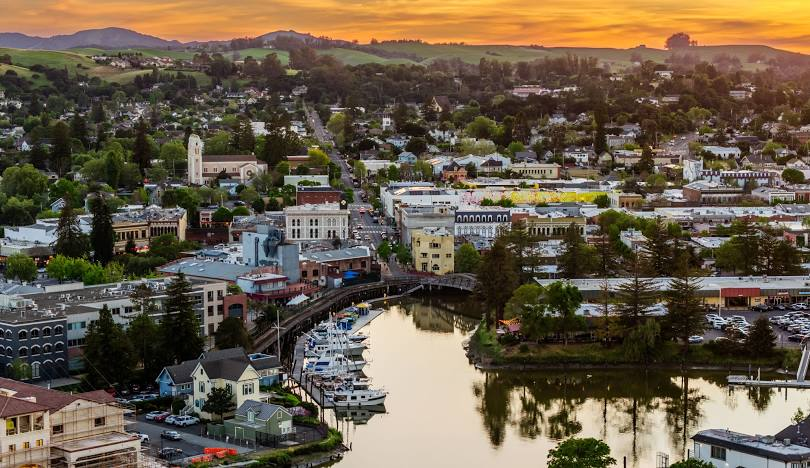
I think I am lucky to live in a place where I can ride everyday, all year. And everything is walkable and bikeable within two to three miles. Because of electric bikes I was able to ditch my car. This afternoon I will be with a popular cargo mom, ancient cyclist, and a safe streets cycling activist at a grade school. I will have tools and a pump. We will be promoting Bike to School Day. That is the 6th.

1777999511513.png
 
I think I am lucky to live in a place where I can ride everyday, all year. And everything is walkable and bikeable within two to three miles. Because of electric bikes I was able to ditch my car. This afternoon I will be with a popular cargo mom, ancient cyclist, and a safe streets cycling activist at a grade school. I will have tools and a pump. We will be promoting Bike to School Day. That is the 6th.

View attachment 209607
Pretty sure that's the setting for a Michael Bay film, Astroid about to hit 3...2...1-
 
IMO those are crazy choices to be making except in very special circumstances. 100+ miles a day, whether electric or gas or diesel is just not necessary. there are other places to live and work and while it’s easier to say that as a professional of some means, there are both cheap and expensive places to live in this country that are near jobs or just about any type.
I am describing how eighty percent of the country by area works and how twenty percent of the population in that area has to live.

This didn't happen overnight -- this is what decades of car dependence has done to our society.

You can make all of the arguments about moving somewhere else you want. But you need to remember that housing is inevitably more expensive someplace where there are a lot of jobs. And if somebody owns their home and moving means going from basically no debt to be 250k or more in the hole they probably are going to bite the bullet and do a 120 mile commute and hope gas prices don't go up too high.

I am describing how the people who produce most of the food you eat have to live. If things get really tough for them it is only a matter of time before things get tough for you as well. The fact that nearly all of the people in such rural areas are passionate "conservatives" is going to make the future political map interesting. In the sense of the ancient Chinese curse.
 
We can have both worlds, but the cycle to work dream lives in a very small slice of life.
Cycling is incredibly limiting to jobs outside of office and retail.
People who need to be there 5 miles or 500 miles and need to bring a ton of gear.
 
Oil prices effect more than just individual commuting costs. They raise all transportation costs (from trucking to aviation to cargo ships, most transportation is dependent on various fossil fuels). They also raise energy costs, since much of the grid is still dependent on fossil fuels in various ways. And energy costs basically effect the price of everything. Petro prices also raise the price of other goods that take them as inputs, like plastics and fertilizers. The knock on effects of the current high oil prices will persist for several months even if everything goes back to normal very soon.
 
People can live where and how they want to. I live in the mountains of Southern California and work is 420 miles away in San Jose. I make the drive one way every two weeks. It works for me but probably wouldn't work for 99% of the population. We buy a lot of stuff from Amazon and didn't renew our Costco membership last year. This is 2026 and there are remote work options as well, which I do half the time.
 
Last edited:
I joined EBR about 4 years ago. Oil prices were higher about that time. I don't recall, was there a similar string back then? Is this a TDS problem or an oil price problem?
Screenshot_20260505_155713_Chrome.jpg
 
I think a big difference between 2022 and 2026 is that 2026 was self-inflicted by a President didn't go through any of the processes to get the public or Congress on board. So you could argue that this war was unlawful from the get-go and we citizens are paying the price for someone else's crime -- and that someone else isn't our King or Dictator-for-life, rather he is a bad employee we mistakenly hired. While in 2022 the Bad Actor was in a country that we expect Bad Things from.
 
CNN explained US gas price jump today. European refiners are not getting crude from their normal suppliers. There are refineries in Kuwait+Iraq+Arabia that cannot ship. Jet fuel supplies in Europe are down to 4 weeks. Turkey air cut 43 air destinations, Lufthanza cut a bunch of flights, every European airline is cutting back. Airline employees being laid off.
US refineries changed the mix to make jet fuel to ship to Europe. US refineries are designed for light Texas crude, not sour Iraq-Kuwait crude, so they are not very efficient at making jet fuel. But they are making money selling jet fuel to Europe. The surplus of US RFG is over for the duration.
The one US refinery designed for sour Venezuelan crude, burned up a heater in the middle distillate (diesel, Jef fuel, kerosene) unit last month at the Port Arthur refinery. Valero's biggest. So Port Arthur Diesel/jet fuel supply is off line.
 
Last edited:
I think a big difference between 2022 and 2026 is that 2026 was self-inflicted by a President didn't go through any of the processes to get the public or Congress on board. So you could argue that this war was unlawful from the get-go and we citizens are paying the price for someone else's crime -- and that someone else isn't our King or Dictator-for-life, rather he is a bad employee we mistakenly hired. While in 2022 the Bad Actor was in a country that we expect Bad Things from.

I mean, 2022 sucked too, and drove inflation up for quite a while after that. I vaguely remember that being a thing people were angry about. And that wasn't really anything the US had an influence over (Russia deciding to kick off against Ukraine wasn't, for once, the US screwing the world up).

The difference here is that its was completely an own-goal by the current admin. Like, Iran sucks, but Leeroy Jenkins isn't exactly military strategy. Theres a difference between getting into a car crash because someone pulls out in front of you and you can't stop in time, and getting into a car crash because you shot your own dick and ran into a tree while googling whether dicks grow back, ya know?
 
It is weird for me going to those flyover states. Vehicles are very large and not electric. Sitting is the new smoking. People sit in cars for so many hours that they look both malnourished and obese a the sametime. Going to a place like a Walmart there you really see it.

Once I went from Buenos Aires and Montevideo to Honolulu Kahala. In Buenos Aires people of higher status wore the very most clothing, layer and layers, taylored, the poor had nothing. In Honolulu it was the opposite. The homeless had the most clothing and highest status people wore almost nothing even in the afternoon rain. Showing off the toned bod was a sign of rank.

Side note: When we first moved to California I asked my dad what Cinco De Mayo was. He said that he was a famous Mexican General.

1778022184338.png
 
Last edited:
I am describing how eighty percent of the country by area works and how twenty percent of the population in that area has to live.

This didn't happen overnight -- this is what decades of car dependence has done to our society.

You can make all of the arguments about moving somewhere else you want. But you need to remember that housing is inevitably more expensive someplace where there are a lot of jobs. And if somebody owns their home and moving means going from basically no debt to be 250k or more in the hole they probably are going to bite the bullet and do a 120 mile commute and hope gas prices don't go up too high.

I am describing how the people who produce most of the food you eat have to live. If things get really tough for them it is only a matter of time before things get tough for you as well. The fact that nearly all of the people in such rural areas are passionate "conservatives" is going to make the future political map interesting. In the sense of the ancient Chinese curse.

the people i’ve known who work in agriculture don’t drive 120 miles a day to and from their jobs. i don’t know how accurate the statistics are but supposedly the average for ag workers is 32 miles - and they make up something like 1% of the workforce these days. not sure where the 20% of the people in 80% of the area of the country comes from, but if that’s really true, those people are mostly not working in agriculture and my point was exactly that while housing is more expensive elsewhere, it’s likely completely offset by the cost of having an automobile and using it to get to work every day.

obviously someone working in agriculture can’t live in an urban environment and use transit or an e-bike to get around, but that’s really an edge case in today’s america. the typical person works in the service sector, health care, and retail. and those jobs are almost entirely clustered where people are, by nature!
 
Last edited:
It is weird for me going to those flyover states. Vehicles are very large and not electric
Many moons ago, the US was tipped up to the west. The fruits and nuts rolled to the Pacific Ocean. The strongest, smartest grabbed ahold of the western bank of the Mississippi where they continue to thrive today.

I'll have to take your word for the quality of clientele at Walmart.

I support large and diesel; our abode for the week.

20260503_195447(1).jpg
 
I think I am lucky to live in a place where I can ride everyday, all year. And everything is walkable and bikeable within two to three miles. Because of electric bikes I was able to ditch my car. This afternoon I will be with a popular cargo mom, ancient cyclist, and a safe streets cycling activist at a grade school. I will have tools and a pump. We will be promoting Bike to School Day. That is the 6th.

View attachment 209607
amazing!
 
I have known a few people that drove those kinds of miles every day. But they didn't work in agriculture, they worked in IT in Santa Clara and San Jose and couldn't afford the kind of home they wanted near the office. All of them drove a small, cheap, economy car for the commute. Although at least one of them also owned a truck to tow their boat with.
 
This is weird, maybe I should send one to Eastern Europe to help out and save a guy trapped in Spandex at 15.3 mph max.

1778026193900.png
 
Back