Watching the peloton - Professional Road Racing thread 2026

Rás Cnoic

Hillrider
Region
United Kingdom
City
Dartmoor
Simon Yates retiring.

Sudden & shock announcement of the Visma star retiring immediately, just before the start of the 2026 season. The 2025 Giro Italia champion aged 33 has called it a day.

I'm pretty shocked. Guess he feels he's retiring at the top of his game, doesn't sound like it's any sudden health issue. Always liked both Yates brothers and together they brought such colour to the peloton and both down to Earth and easy good humoured chatters in interviews. Class acts.
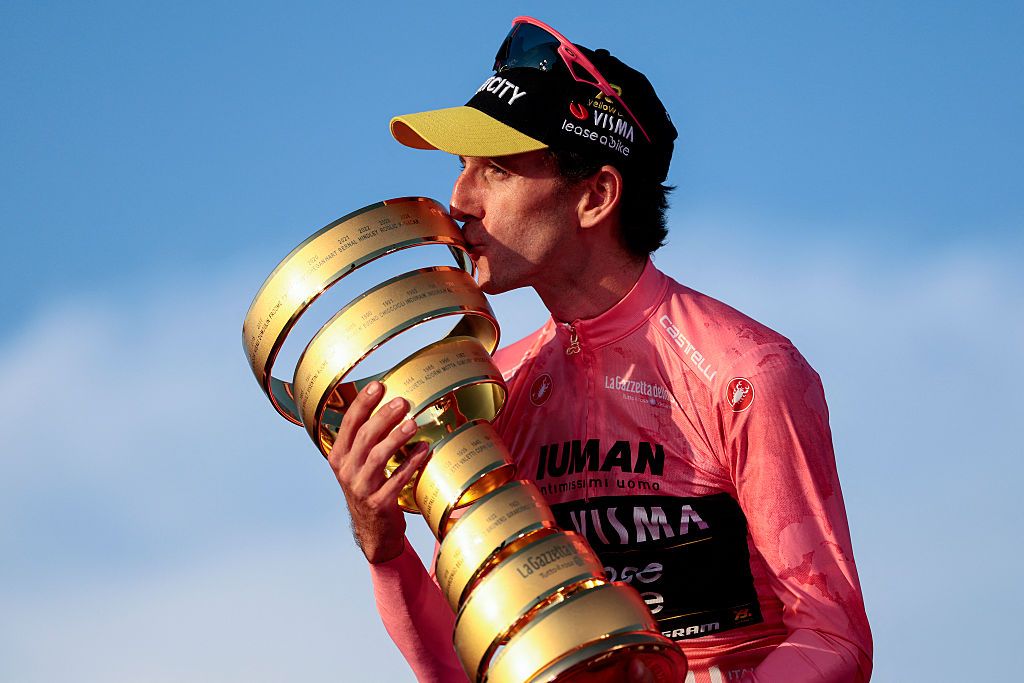

Aslo, as it's 2026, I'm starting this new thread for all road racing chat. Seems simpler than starting a new thread for individual races.

Season kicks off this month from Adelaide and environs for the Tour Down Under (and Cadel Evan's Classic) where we can begin to see the new team colours & line ups. Exciting. Always feel Spring is coming once the season gets underway and as ever, can't wait for the Spring Classics and the hills and cobbles, my favourite part of the season. Roll on the white roads of Strade Bianche!

 
I like O'Connor and Jayco for the TDU. I won't see it as I'm not paying $149 for Flobikes. Come February I will get HBO Max for almost everything else except the ASO races (TdF, etc.)
 
I like O'Connor and Jayco for the TDU. I won't see it as I'm not paying $149 for Flobikes. Come February I will get HBO Max for almost everything else except the ASO races (TdF, etc.)
Yes I'm kind of interested in the Netflix take over of Warners because for some labrinthian reason Netflix would acquire TNT (Discovery/Warners) sports in Europe but not in the US. Which begs the question what will happen to cycling coverage? Apparently TNT is haemorrhaging money and signs are Netflix has little interest in it. So If they just add it to normal service it would be loads of cycling coverage for standard Netflix rates, unlike the £30.99per month of TNT currently. I can hope but I bet it gets worse not better! I'll stick to You tube highlights & pirate streams for now and see what happens. Just 2 years ago it was around £40 per year for all cycling road races & cyclocross and no ads! A golden age of viewing.
 
I like O'Connor and Jayco for the TDU. I won't see it as I'm not paying $149 for Flobikes. Come February I will get HBO Max for almost everything else except the ASO races (TdF, etc.)
It's Jayco's big home race so they'll be expected to really compete. Must check the finalised team line up. Think Dunbar has left for Pinarello Q36.5 this year.
 
Adelaide is currently 18.5 hrs ahead of California time. So an 11:10 am start for Stage 1 on Jan 20 there is at 4:40 pm on Jan 19 here, right?

Screenshot_20260107_084054_Chrome.jpg

Certainly more civilized than watching EU races live from California.
 
Can one of you people explain to me the peloton thing? I don't really understand most of the commentary on the Tour de Wherevers. You've got a clot of cyclists and then they talk of leaders etc. If you have a team and one rider of Team A crosses the finish line first but the rest of the team is in the back, who wins? Is it a team sport or an individual sport?
 
Can one of you people explain to me the peloton thing? I don't really understand most of the commentary on the Tour de Wherevers. You've got a clot of cyclists and then they talk of leaders etc. If you have a team and one rider of Team A crosses the finish line first but the rest of the team is in the back, who wins? Is it a team sport or an individual sport?
Others understand peloton dynamics better than I do. But maybe I can get the team part started.

As I understand it, the rider most likely to bring in the greatest number of sponsor-pleasing wins, podium places, and special jerseys is designated the leader by team management — often for an entire season or string of seasons.

It's the rest of the team's job to do everything they can during the race or stage to help the leader get to the day's finish line first. Or in a stage race like the Tour de France, at least to keep the leader's overall time competitive.

The team does that primarily by protecting the leader from crashes, shielding her from air resistance, and legally interfering with or faking out competitors at strategic times. They can also play a role in keeping the leader properly nourished and hydrated throughout the day.

Of these, the greatest team effort generally goes into reducing the air resistance encountered by the leader, thereby conserving her precious enegy for when it counts most. They typically do this by keeping one or a string of team members right in front of the leader as much as possible until the end the race, burning up all their own enegy in the process.

In practice, these strategies are vastly more complicated than they sound, but they can make a big difference in the leader's success. If the leader's having a bad day, as they all do from time to time, the team's race director can divert some support to a member with better odds that day.

Anyone, please correct me if I got any of this wrong.
 
Last edited:
Jeremy, you did fine as a high level view. Teams have a variety of riders that specialize in certain events, i.e. one day races, stage race GC, sprinting, climbing, time trialing, and team support. They are generally paid appropriately. The "best" GC rider may or may not be the team leader for any specific race depending on health, fitness level, upcoming races and training peaks, etc. The "big guy" isn't always the leader, but most often is, at least for mid-season stage races.

The rest of the original question's best answer is: Read A Book. Because if you have never raced road races on a team, that's what it will take to understand some part of what you are watching. I couldn't possibly write a book on the topic in a forum like this.

Also, stay tuned to this thread. Those that know the sport well will share commentary and discussion that you can learn from. No question is stupid nor will it be treated that way by those that are helping.
 
Can one of you people explain to me the peloton thing? I don't really understand most of the commentary on the Tour de Wherevers. You've got a clot of cyclists and then they talk of leaders etc. If you have a team and one rider of Team A crosses the finish line first but the rest of the team is in the back, who wins? Is it a team sport or an individual sport?
Ok it's complicated but primarily individual in that there is a team leader and generally the team is there to help them win. But with 100 plus riders it doesn't always go to plan and any rider can win.

And basically the first rider across the line is the winner.

Then there is the terrain. Like boxing there are different weights of riders, flyweight, heavyweight etc. A high altitude race you have lightweight riders (with huge lung capacity) on flat stages heavy muscular sprinters, but unlike boxing here they all race together against each other (unless on same team). On a flat race the teams job might be to block the wind for 200 miles so the muscular sprinter arrives fresh into the last 200 metres. On a hilly but not mountainous race you have another style of rider who can 'punch' away from other riders on steep little hills.

To then complicate this craziness further you have stage races where the racing takes place over several days, some flat, some hilly some mountainous. The winner here is the rider who consistently finishes high up each day so their combined time of each stage is the lowest. In other words they win overall but there are also awards for each days stage winners.

It's probably the stage races especially the 3 annual three week (21days) tours like the Tour de France that make it so bloody complicated and pretty much unlike any other sport.

In terms of why this has evolved like this it's really down to the wind. All the race tactics are about sheltering from the wind, that's what the peloton is; a way of most riders sheltering from the wind behind the few at the front. You can save something like 70% of your energy if you are behind someone with them blocking the wind so that becomes a defining factor in races.

I'm going to stop here, there's loads more, like every sport with all the nuances in them but hope this made some kind of sense as a start.
 
Others understand peloton dynamics better than I do. But maybe I can get the team part started.

As I understand it, the rider most likely to bring in the greatest number of sponsor-pleasing wins, podium places, and special jerseys is designated the leader by team management — often for an entire season or string of seasons.

It's the rest of the team's job to do everything they can during the race or stage to help the leader get to the day's finish line first. Or in a stage race like the Tour de France, at least to keep the leader's overall time competitive.

The team does that primarily by protecting the leader from crashes, shielding her from air resistance, and legally interfering with or faking out competitors at strategic times. They can also play a role in keeping the leader properly nourished and hydrated throughout the day.

Of these, the greatest team effort generally goes into reducing the air resistance encountered by the leader, thereby conserving her precious enegy for when it counts most. They typically do this by keeping one or a string of team members right in front of the leader as much as possible until the end the race, burning up all their own enegy in the process.

In practice, these strategies are vastly more complicated than they sound, but they can make a big difference in the leader's success. If the leader's having a bad day, as they all do from time to time, the team's race director can divert some support to a member with better odds that day.

Anyone, please correct me if I got any of this wrong.
Sorry Jeremy on my phone here & didnt see any replies to OP's question until after I'd posted my longwinded answer. So naturally some repetition here. Complicated answers but it's a complicated sport.

Good question about what book to read. Realise I don't have a clue, haven't read many and they would have been about individual riders, biographies and the like. Good topic for discussion. A cycling blog I follow often gives book recommendations, I must look back over a few.
 
The two things I do understand about the peloton riding is the big mass/area of riders gain from aerodynamic effects to reduce the air drag for most riders. The array of riders depends on the wind direction, too. That's why the peloton can ride at the crazy speed, and an attack can be cancelled by the peloton as an individual rider has to fight the air drag alone.

The other thing is a tight gearing on racing bikes. The riders must ride at their optimum cadence, and they need to ride at the same speed as the rest. So the cassettes are geared 1 tooth from the next sprocket, at least for high gears. Also, the 2x drivetrain is the must in road racing, while gravel cyclists are often happy with the 1x drivetrain (which has bigger gaps between the gears).

These two things caught my interest although I'm aware there is a way more to understand.
 
As a gearing geek, would love to understand how they approach all the tricky trade-offs involved in gearing, say, a TdF bike for a particular rider and stage. Existing data, testing, experience, recon, and rider preferences probably all come into play.

The linear spacing (1 tooth per cog) of the block optimized for peloton use seems pretty settled. Question is, how many cogs to devote to that, and what cogs to use everywhere else?

Then there are 2 chainrings to sort out. And all these choices depend on all the others.
 
Last edited:
An interesting video (watch from 3:26):


Chainrings: 55/40T
Cassette gearing: 11-12-13-14-15-17-19-21-24-27-30-34

I should not say anything though as I am a total noob re road racing :)
 
The two things I do understand about the peloton riding is the big mass/area of riders gain from aerodynamic effects to reduce the air drag for most riders. The array of riders depends on the wind direction, too. That's why the peloton can ride at the crazy speed, and an attack can be cancelled by the peloton as an individual rider has to fight the air drag alone.

The other thing is a tight gearing on racing bikes. The riders must ride at their optimum cadence, and they need to ride at the same speed as the rest. So the cassettes are geared 1 tooth from the next sprocket, at least for high gears. Also, the 2x drivetrain is the must in road racing, while gravel cyclists are often happy with the 1x drivetrain (which has bigger gaps between the gears).

These two things caught my interest although I'm aware there is a way more to understand.
I think the power of the wind in racing tactics is best demonstrated in flat country with no trees with a massive crosswind when the peloton breaks down into echelons. In a moment all tactics are changed and it's complete chaos. If you are caught on the wrong side of a split it might be impossible to get back to the front group.

It's a bit like watching birds migrate in Vs on a blustery day! And I always think because of the wind it looks like a sailing race, stealing the wind as they round a buoy.

Screen-Shot-2021-02-28-at-5.41.48-PM.png
Crosswind-Echelons-in-the-Dessert-2-e1657274785563-1000x675.jpeg
 
If the wind was the major factor between winning and losing, then all breakaways would be caught. I know that you see a lot of this in Grand Tour racing, where a rider or group goes up the road early for what seems like an eternity, only to get run down by a charging chase group or peloton and finish at the back. If all you watched was Grand Tour racing, you'd think that this is how it goes at all levels, but it's not. Solo or small group breakaways succeed often, and not just in mountain stages. Why? Because that group of riders has managed to neutralize the draft advantage of the peloton by using tactics.

The success of a breakaway depends on many things. Rider strength and fitness, terrain, proper hydration and nutrition, and the commitment of the rider, or the whole group, to go all out and still lose. At the same time, the chase groups or peloton are making a calculation. Who is in the break? What teams are they with? Where does each rider stand on GC or an intermediate competition? That factors greatly into the decision on whether the groups behind chase hard or not. They have to decide whether to let the break go or chase it down, risking finish results in the process.

What makes a breakaway group dangerous? One-day races are very different from stage races, which have another layer of complexity in this decision, so let's just talk one-day for now. Let's say there's a break of five lower ranked riders up the road early with two minutes on the peloton. Chances are, that gap isn't going to change much, and they will get caught at the finish. Now imagine that there is a group of five, two each from two teams, team A and team B, and a national champion. If you are on team A or team B in the peloton, then you are not doing an ounce of work unless you are on the front keeping the pack speed as low as possible without encouraging attacks. Your job is to make that break succeed by allowing the gap to increase. If you are on team C, with no riders in the break, you want to attack as hard as you can and bridge that gap to the leaders. When the peloton gets antsy, chaos ensues. Smart riders use chaos to their advantage.

Up at the front, you've got two teams and a strong solo rider. They all know what the gaps are (via radio in certain races and via the time board motor in races where radios are not allowed). They all have to work to keep the break away, unless they don't want to. Maybe the gap is bridgeable and they want another teammate in the peloton to bridge. Maybe they are close to the finish and want to save it for the sprint. Remember who is up there. Two teams and a solo rider. What do you think the two teams are thinking about most? The other team. It's a cat and mouse game going on at 45km/h. Who looks strong? Who has the better sprint? Who has done the least amount of work? What do we do if one rider of the other team attacks? Chase immediately, or stay ahead of his teammate in the breakaway, and watch and see?

All of these situations and decisions really have little to do with the wind, and everything to do with tactics.

Watch this video. It's the Women's Olympic road race from 2024.

EDIT: NBC has shut down embedding of their clip. You'll have to search YouTube for it. Search for Kristen Faulkner SHOCKS and you should find it. It's just under 7 minutes long.

Things to look for:

Breakaways, gaps, what happens when the breaks get caught
How the crash happens, who is in it, and what happens afterwards
Who attacks and when

What you may not know is that while Kristen Faulkner is a world class rider, she does not have world class palmares (lots of great results and accomplishments). That is not true of the other three riders who are with her in the final breakaway of the day. Those three are three of the best women racers in the world. They all know each other, and anyone of them can win on any day no matter who else is in the peloton. The final sprint proves this. What is not shown on the video, but I saw it with my own eyes while watching this race live (I was screaming so loud my wife left the room), was what happened when Faulkner attacked the breakaway. There may be a clip out there with it. For those who did not see it, Faulkner attacked, and the other three played cat and mouse, looking at each other. Should we let her go? If not, who will start the chase? Are we all willing to work together so that one of us wins the gold? Look at the gap that Faulkner wins by. She's not that much stronger than the other three, who have the wind as an advantage. They thought that they could catch her and beat her in the sprint, but Faulkner beat them all with tactics.

Questions?
 
Last edited:
Back