spokewrench
Well-Known Member
- Region
- USA
Knives were a problem in butchering a goat. You had to get the hide off, then open the abdomen and remove the gut without puncturing anything. There was the danger of cutting your other hand. A knife would get gummed with slime that would make a handle hard to grip and keep a blade from cutting.
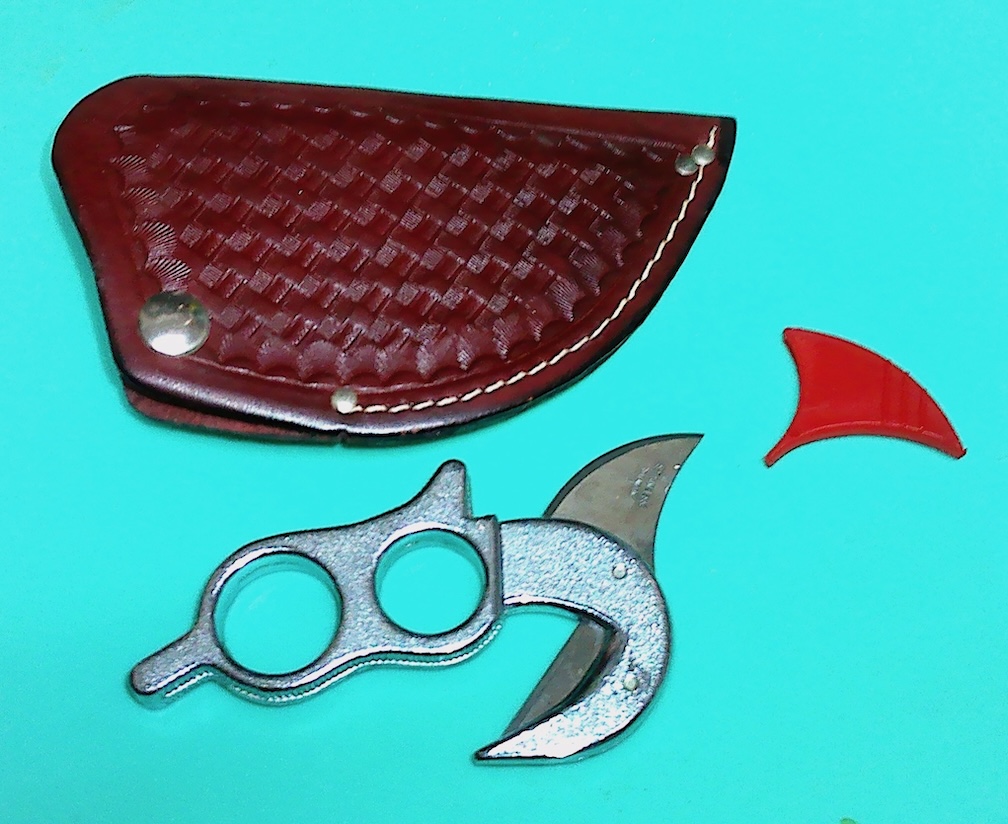
This $10 skinning knife made a big difference. For most cuts, the spur blade was plenty. It offered control and a smaller danger zone for my other hand. The slitter would open the abdominal cavity with no risk of puncture. Slime didn't impair my grip, and the short blades could easily be dipped in water and wiped. The blade could be unscrewed for sharpening. The red thing is a plastic sheath for the spur blade.
This $10 skinning knife made a big difference. For most cuts, the spur blade was plenty. It offered control and a smaller danger zone for my other hand. The slitter would open the abdominal cavity with no risk of puncture. Slime didn't impair my grip, and the short blades could easily be dipped in water and wiped. The blade could be unscrewed for sharpening. The red thing is a plastic sheath for the spur blade.
Last edited: