The transition

No idea how old this semi was or what caused the fire, but its clearly the truck not the trailer itself.
Also theres 2 million trucks in America, many decades old, only a few hundred Tesla Semis
Your understanding of the statistics needs remediation, please.

Electric vehicles have about 25 fires per 100_000 sold.
Fossil fuel burning vehicles have about 1530 fires per 100_000 sold.
Hybrid vehicles have about 3475 fires per 100_000 sold.

It doesn't take genius level reasoning to figure out that a kind of vehicle that requires fire to even move (and has combustion in the name) is probably more prone to unplanned fires than one that does not.

Related:
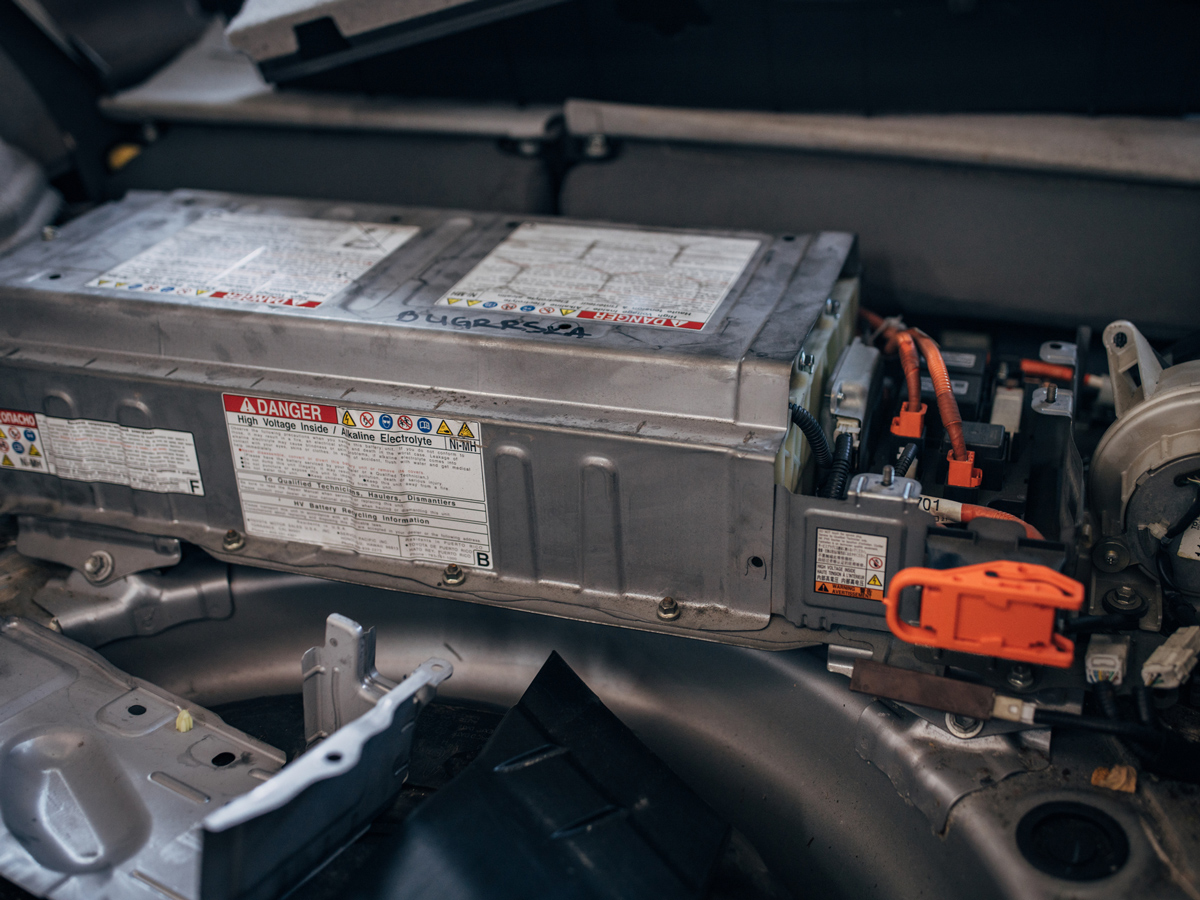

 
Remidation of statistics, well no, because we were specifically referring to the Semi.
and the combustion angle is rather obtuse, ever heard of an electric fire.

In the real world outside reddit point scoring, this is a blow for Tesla, maybe coincidental that the shares dropped.

Bursting into flames with the power of eight EVs on a busy rush hour highway, thats a lot of eyes,
 
Facts are stubborn things.

Vehicles that burn stinky liquids to move catch fire at a rate 60 times higher than electric vehicles. People are seriously injured or die in dinosaur burner fires at a rate of about two percent. The number of people who die (at least directly) from EV fires is approximately zero. But that is largely because EV fires are so rare that it is hard to get a reliable number on what the actual rate would be.

No reasonable person, presented with those facts, would argue that electric vehicles are more dangerous than fossil fuel burning vehicles.

Most EVs (nearly all recent models) have warning systems that detect thermal runaway before a fire starts so people can get someplace safe before the fire even starts. We've never had systems like that in vehicles that burn stuff to move. I think it would be reasonable, if we are so concerned about safety, to require all motor vehicles of any propulsion type to have such systems to be street legal.
 
"Obviousness" is not a substitute for data, testing, or valid reasoning. Many things that once seemed like "common sense" (such as the earth being flat or the sun revolving around the earth) have been proven wrong by science. The common sense claim is often used to avoid facts and shut down discussion. Facts are stubborn things.
 
Seeing as we are predictably going down this route.
A few hundred semis on the road, two have burnt to a cinder, which makes them in a very pointless statistic of being 10 times more likely to completely incinerate to dust than diesel truck of any age or poor maintenance having any type of fire whatsoever
 
Last edited:
I figure my lighter ebike has cost about 2 cups of coffee over 4000 miles. So $100 would charge it enough for over 100k miles. Calorie intake for me not included :) The heavier less efficient commuter has probably cost about $27 over 18000 miles.

On the other end of the scale, there has been a stretch Hummer limo parked at Denny's for 6 weeks now. Google tells me that at 8 mpg it would get about 150 miles on $100 of gas.

If they gave away cars for free the above chart would be all anyone needs. In the real world, most people still have to consider things like price point, depreciation, and potential repair costs.

Interesting site that seems decently put together and has a reasonable list of 100 models of cars to compare.
 
We have had a diesel price increase, but tbh it has been kept low for a good few years and the price now is what it should have been with inflation.

Oil supply is back to normal and we are seeing the price dropping, but the price increase in North America seems catastrophic, Biden pushed up the price, Trump brought it down for a bit, but those prices are almost catching up with Europe!

They are ramping up to bypass the Strait, canals, pipelines and alternative routes.
Still the good old USA are keeping the world slippery.
Screenshot_20261101-082347-265.png
 
Do people actually make fuel cost part of the decision? That would suck. After looking at needs (maybe wants), everything else is just "that's the way it is."
Well until very recently there weren't many practical options. But the world does have a tendency to change.
 
If they gave away cars for free the above chart would be all anyone needs. In the real world, most people still have to consider things like price point, depreciation, and potential repair costs.

Interesting site that seems decently put together and has a reasonable list of 100 models of cars to compare.
There are two sides to the depreciation coin, though. If EVs are seen as depreciating excessively, that is one way of saying that used EVs are a better deal. And in most cases you can easily get a battery health report from an EV right on the dash so you'll know much more about what you are buying than you ever could with a gas car.

There are a couple of other issues with the depreciation assumptions that get baked in, though.

Luxury brands and high-end luxury cars with luxury doodads depreciate much faster. There is a lot of clustering of electrics on the luxury end that bends the curve. I'm doubtful that a Chevy Bolt depreciates as rapidly as an electric Beemer.

Late-model gas burners are also depreciating rapidly, and likely will depreciate much more rapidly in the future. One big reason for that is that the newer platforms are in many cases just plain worse than earlier evolutions. You'd much rather own a late 2010s Toyota Tacoma than a 2026 Tacoma. And that 2026 Tacoma might well run you $80k. You can't tell me that truck won't depreciate much faster.

Since the stupid war started, three-year depreciation rates for EVs went from 49% to 55% to 38% to 42%. By comparison, three-year depreciation rates for gasoline cars are between 30% and 40%. So I suspect that updated numbers in that ownership cost index would already tell a quite different story. And used EV prices have surged about ten percent this year already.
 
Fuel cost doesn't just apply to fuel type. There have always been choices in mpg.
Well, except that you couldn't ever buy a gas car that got 120mpg. So I'd argue that there were choices that did not exist before that do now.

Electricity is not traded on large international markets so deranged events on the other side of the world have a harder time increasing the cost of electricity. There is a quiet risk tax you are paying when you are pumping gas.
 
Back