Robot Mowers

6zfshdb

Well-Known Member
Region
USA
City
Northeast Pennsylvania
Not specifically an e-bike, but I suppose you could ride on one. 😁

I mow 7 acres, mostly with a tractor, but there are places where a push mower is required. Some are quite steep and difficult to traverse on foot, let alone push a mower. As I get older, I value my time and am less inclined to want to spend it mowing the lawn. I used to enjoy being outdoors doing the chore but now, not so much. I'd rather get my outdoor "fix" by riding the bike.

Robot mowers have been around for a few years now but the new generation have very sophisticated designs using GPS & RTK navigation. I've been eyeing this one from Lymow:

https://www.lymow.com/?g_campaign_id=22376364225&g_campaign_name={campaign}&g_adgroup_id=&g_ad=&gad_source=1&gad_campaignid=22599876450&gbraid=0AAAAA-VQrtz9MnNOxK2PXZTvJxpYZrRSr&gclid=Cj0KCQjwqPLOBhCiARIsAKRMPZr4E83FrlIkf1KBL9eJQmp7Zxt1yc4XD1BhCqJxIodGUNryixLN-uEaAqi3EALw_wcB
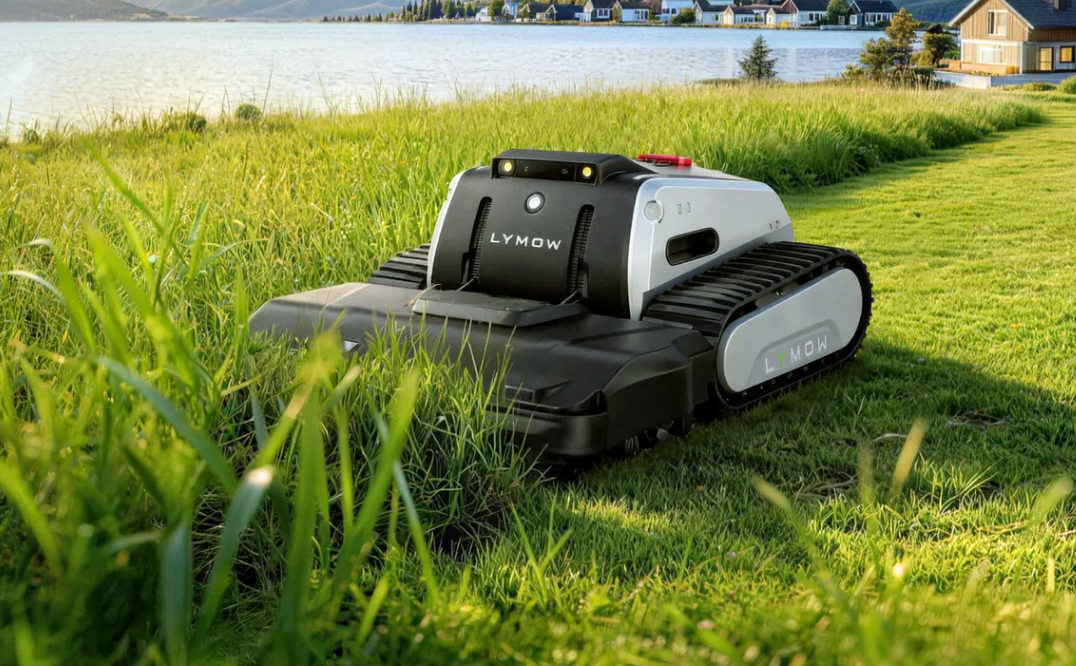
1776083173439.png


Not cheap, about what you would pay for a mid grade e-bike, but it might be worth it if it frees up more time to ride.

Anyone have experience with these mowers?

 
I have about an acre of lawn. I have no experience with robotic mowers, but I’ve been looking into them, and this one is at the top of my list.

I’m paying $175 per week currently for mowing, edging and trimming, and flowerbed weeding. If our service does just the edging, trimming and flowerbeds, and runs a mower around the edges if needed, for say $100, the mower would pay for itself in about a year (the service doesn’t come regularly in the winter). Reality is I’d probably buy two, for redundancy, so make it two years, which is still acceptable.

My concern is that I don’t want to be a guinea pig, so I’m not ready to jump on it. Hopefully we’ll see some good reviews after a bit more real-world usage.
 
175 dollars a week...
Two men for two hours, so four labor hours plus costs associated with truck, trailer, lawn equipment, fuel, and office overhead. They mow, edge, trim, weed and rake the beds, and maintain our shrubbery (of which there’s a LOT). Seems reasonable to me, especially since I got multiple bids and they were in the middle of the range. Plus, they do a hell of a lot better job than others I’ve used.

Yeah, I could get it for less if I hired an illegal immigrant with a truck and a mower, but I prefer to hire a legit company that I know will show up every week and has management that will ensure I’m satisfied.
 
It is possible to mow, ariate, and maintain grasses and weeds and to fertilize with no tech. Weeds even poison ivy become delicious shish kebab and steaks. It is why Mt. Vernon was so lovely 250 years-ago. Some are rediscovering this resource. Movable solar powered fences help. Shrub shoots get trimmed as are low branches. It is great for fire protection. Miles of golf course green for free.

1776304369519.png
 
Last edited:
I haven't had a lawn since I moved to the mountains 25 years ago. Once or twice a year we pay someone to clear the pine needles and the very sparse weeds around the house. It costs about $300. Dealing with the snow is another matter though.
 
It is possible to mow, ariate, and maintain grasses and weeds with no tech. Weeds even poison ivy become delicious shish kebab. It is why Mt. Vernon was so lovely 250 years-ago.
It’s kinda humorous that an advocate and builder of e-bikes would suggest avoiding technology. Also kinda expected from a troll.
 
I go for the low impact. Bikes over cars, sheep and goats over mowers. I have not participated in making a contrail in 15 years. I have not owned a car since January 2018. I am not trolling it, I am doing it.
 
I have about an acre of lawn. I have no experience with robotic mowers, but I’ve been looking into them, and this one is at the top of my list.

I’m paying $175 per week currently for mowing, edging and trimming, and flowerbed weeding. If our service does just the edging, trimming and flowerbeds, and runs a mower around the edges if needed, for say $100, the mower would pay for itself in about a year (the service doesn’t come regularly in the winter). Reality is I’d probably buy two, for redundancy, so make it two years, which is still acceptable.

My concern is that I don’t want to be a guinea pig, so I’m not ready to jump on it. Hopefully we’ll see some good reviews after a bit more real-world usage.
I don't pay anyone to maintain the acreage. Ours is a rural country setting on a dead end private road that few people even see. Still, we like to keep the place looking presentable, even if it's just for ourselves. No money to be saved in landscaping fees, just a time saver, which at my age, is quite valuable. That's the main reason I'm looking at these mowers.

I agree with you though, being a "beta" tester for the product isn't something I want to get involved with. I'm watching posts from a reviewer on another forum to get his take on the product.
 
It is possible to mow, ariate, and maintain grasses and weeds and to fertilize with no tech. Weeds even poison ivy become delicious shish kebab and steaks. It is why Mt. Vernon was so lovely 250 years-ago. Some are rediscovering this resource. Movable solar powered fences help. Shrub shoots get trimmed as are low branches. It is great for fire protection. Miles of golf course green for free.

View attachment 208734
My wife and I are intrigued by this process and do what we can with our 25 acres. Unfortunately, some areas are better suited than others. The biggest problem we have is invasive species that are taking over open fields in this part of the state. Autumn Olive and Multi Floral Rose are the biggest offenders, which require constant and aggressive attention. Japanese Knot Weed is another that is inundating our wetland. It's difficult to deal with invasives using a natural approach.
 
Good luck, 6! 7 acres? I’m not sure if I read your post right, but I don’t think a robot would be a good use for such a big property. While I’m at it, a riding, zero-turn mower is just the ticket for large properties like yours. They’re a lot of fun to use, by the way, and might make the time more enjoyable for you. A good one will set you back around $10K though, so you might not want to do that. Anyway, keep us posted!
 
I go for the low impact. Bikes over cars, sheep and goats over mowers. I have not participated in making a contrail in 15 years. I have not owned a car since January 2018. I am not trolling it, I am doing it.
My wife and I greatly favor this approach but is isn't practical everywhere. Ideal in urban / suburban settings but not so much in rural areas. We live in the Pocono Mountains and there are very few roads that are safe for bikes. The climate is also restrictive here half the year.

We value our privacy and the ability to do what we like with our rural property. I guess that's the price we pay for living here.
 
I go for the low impact. Bikes over cars, sheep and goats over mowers. I have not participated in making a contrail in 15 years. I have not owned a car since January 2018. I am not trolling it, I am doing it.
That’s very commendable, but it’s not for me. On the other hand, robotic mowers are battery-powered, so i would think you’d approve.
 
Good luck, 6! 7 acres? I’m not sure if I read your post right, but I don’t think a robot would be a good use for such a big property. While I’m at it, a riding, zero-turn mower is just the ticket for large properties like yours. They’re a lot of fun to use, by the way, and might make the time more enjoyable for you. A good one will set you back around $10K though, so you might not want to do that. Anyway, keep us posted!
Yes, I mow 7 acres, but most of it is done with a 60HP tractor. Heat and A/C in the cab make the 4 hour job fairly pleasant. Most of that time is spent maneuvering around on one acre or less parcels, which a robot mower could easily do. That would cut my mowing time in half.

I actually came very close to buying a zero turn last year. Home Depot was running a sale on Ego electric models. Still twice the price of a robot and it wouldn't shorten the mowing time significantly. I would also loose the comfort of the tractor A/C.
 
That’s very commendable, but it’s not for me. On the other hand, robotic mowers are battery-powered, so i would think you’d approve.
Although better than gas mowers, I am not into lawn deserts. One of my sisters lived in eastern San Diego county in a gated community with four acre lots and McMansions. People would pump wells there in the desert by Arizona and Mexico to create huge chemically enhanced laws. No birds or other life could exist there, with no habitat. At one time there were bevers there.

 
Yes, I mow 7 acres, but most of it is done with a 60HP tractor. Heat and A/C in the cab make the 4 hour job fairly pleasant. Most of that time is spent maneuvering around on one acre or less parcels, which a robot mower could easily do. That would cut my mowing time in half.

I actually came very close to buying a zero turn last year. Home Depot was running a sale on Ego electric models. Still twice the price of a robot and it wouldn't shorten the mowing time significantly. I would also loose the comfort of the tractor A/C.
Gotcha’. Great, a robot sounds like a good thing for you then! Yeah, sorry, no experience to offer, 6. I would be concerned about the durability of the robot given the amount of mowing you’d be asking of it. Good luck. I hope it works out.
 
Although better than gas mowers, I am not into lawn deserts. One of my sisters lived in eastern San Diego county in a gated community with four acre lots and McMansions. People would pump wells there in the desert by Arizona and Mexico to create huge chemically enhanced laws. No birds or other life could exist there, with no habitat. At one time there were bevers there.

On this we agree, but it’s not relevant in this situation.

Since I live near Seattle, with all of the storied rain, and the clay beneath my lawn, it sometimes seems more like a marsh than a desert. Also, I’m on 3.5 acres, half of which is heavily forested. No beavers here, as there’s no stream, but we do see a lot of deer, rabbits and coyotes.

The caveat to the above is that we have a low snowpack in the mountains this year, so a drought has been declared. Thus, I expect lawn-watering to be restricted this summer. The upside is I’ll save some money on my water bill.
 
My wife and I are intrigued by this process and do what we can with our 25 acres. Unfortunately, some areas are better suited than others. The biggest problem we have is invasive species that are taking over open fields in this part of the state. Autumn Olive and Multi Floral Rose are the biggest offenders, which require constant and aggressive attention. Japanese Knot Weed is another that is inundating our wetland. It's difficult to deal with invasives using a natural approach.
We had 70 acres of overgrown farmland. Multifloral rose, kudzu, briars, and poison ivy were barriers, besides shrubs and trees with low limbs. We fenced maybe half for goats. They kept it clear for walking. They also provided fire protection by leaving little to turn brown annually.
 
At one time there were bevers there.
Hamlet said wealth is the cause of war. In Roman times, someone learned to make beaver fur into felt garments to make armor more comfortable. That increased the price. By 1500, they'd vanished in many places. In North America, the tradition was to take only the young adults that were heading overland to try to start more colonies. Wealth from the overseas market let the Iroquois raise an army that conquered New York, Pennsylvania, West Virginia, Kentucky, Ohio, Indiana, Illinois, Michigan, part of Ontario, and part of Virginia. As in Europe, beaver populations disappeared. The Iroquois lost interest and withdrew.

Without the bottomland provided by beaver dams, the natives who had been there before the Iroquois conquest couldn't depend on adequate crops. Some headed west. Others raided white settlers, which invited white conquest of the somewhat empty land. It seems not to have happened in New England until beaver traps came along, allowing whites to exterminate beavers without native cooperation. More and more white farmers had to do what natives had done in the wake of the Iroquois, abandoning their farmland to seek better conditions to the west. Nowadays, New Englanders have found that there can be too many beavers.
 
We had 70 acres of overgrown farmland. Multifloral rose, kudzu, briars, and poison ivy were barriers, besides shrubs and trees with low limbs. We fenced maybe half for goats. They kept it clear for walking. They also provided fire protection by leaving little to turn brown annually.
That is so cool. Turning thorns and poison ivy into stew and BBQ for free, and fire protection as a bonus.
 
Back